Shoes for fastpacking: what really works (and what doesn't)
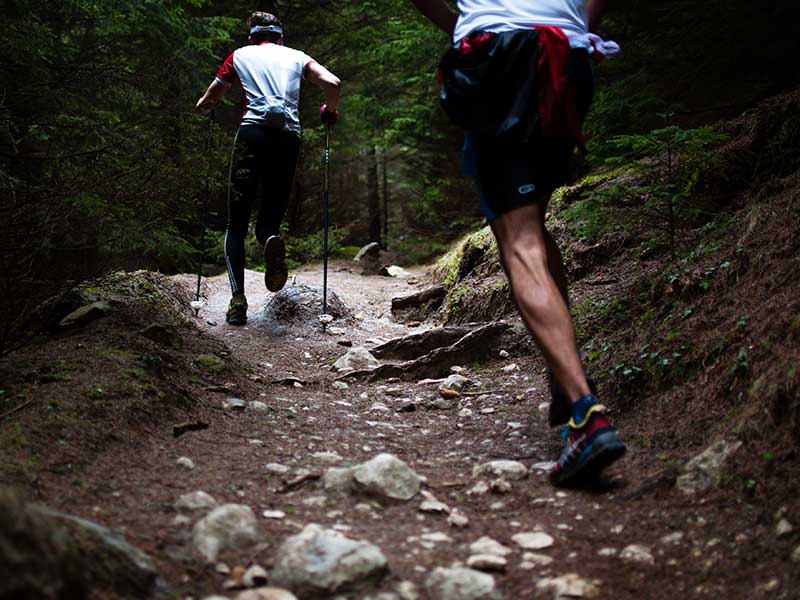
At fastpacking, footwear is not a detail.
It is the most influential decision in how you move, how you get tired and how you end the day.
This is where many stumble. Shoes that are too stiff “for safety”. Or too flyy “because they weigh too little”. Models designed for running that are punishing when walking for hours. Others designed for walking that feel clumsy when you want to flow.
The question is not whether to use trekking or trail shoes.
The question is: What kind of movement are you going to do for hours?
This guide is not about brands or fashions.
It goes from what really works in fastpacking when you add up kilometres, elevation gain and days.
What you will get out of this guide
After reading it, it will be clear to you:
- what to look for in a fastpacking shoe
- why many “classic” options do not fit in
- how to choose without going to extremes
- when something more rigid makes sense... and when it doesn't.
- which mistakes take their toll on you from the second day onwards
- how to find your balance between protection and fluidity
Before choosing shoes: a key idea
Fastpacking is neither like classic trekking nor like pure trail running.
It is right in the middle.
He walks a lot.
Runs at times.
It charges little, but it charges.
And it does so for hours... and days.
Therefore, copying footwear from one world or the other often fails.
What you need is dynamic comfort, no static protection or extreme reactivity
Trekking or trail? The false debate
For years it has been posed as a dichotomy.
And it is not.
Trekking shoes: when do they become surplus to requirements?
Classic trekking shoes provide:
- stability
- protection
- sense of security
But also:
- rigidity
- weight
- lower sensitivity
In fastpacking, such rigidity often penalises:
- the rhythm
- fluidity
- accumulated fatigue
They work in very technical terrain or with high loads.
But as soon as you want to move nimbly, they start to feel like a brake.
Trail running shoes: when do they start to fail?
Trail running shoes provide:
- lightness
- dynamism
- good response
But many are designed for:
- running, not walking
- short impacts, not continuous hours
- fresh feet, not tired feet
Some of them are hard when walking a lot.
Or too unstable when fatigue sets in.
What to really look for in fastpacking shoes
More than labels, it matters how they behave over time.
1️⃣ Walking comfort (top priority)
If a shoe is not comfortable walking, It is not suitable for fastpacking.
Before thinking about:
- grip
- drop
- weight
ask yourself:
Could I walk for 6-8 hours at a time with this?
2️⃣ Balanced cushioning
Neither extreme minimalism nor soft mattresses.
You need:
- sufficient cushioning for long days
- but with stability when the terrain becomes difficult
Excessive softness takes its toll on the second day.
3️⃣ Lateral stability and support
When fatigue sets in:
- the ankle loses precision
- support becomes more clumsy
A good fastpacking shoe:
- supports the midfoot well
- does not dance on crossings
- transmits security without excessive stiffness
4️⃣ Reliable, non-aggressive sole
You don't need competition studs.
You need:
- predictable grip
- good performance on rock and mixed terrain
- durability
Confidence is worth more than extreme grip.
❌ Common mistakes when choosing trainers
Almost all of them are repeated:
- choose by weight without thinking in hours
- copying the model of someone who runs more
- wearing shoes that are too stiff “for safety”.”
- wearing new shoes on long routes
- not to think about the second and third day
My shoes for 1-3 day hikes (real criteria)
I am not looking for the perfect model.
I am looking for one that delivers every time:
- comfortable walking
- stable with fatigue
- medium cushioning
- good grip
- without excesses
I prefer to lose some “reactivity” by running.
to gain hours of walking comfort.
That exchange, for me, is key.
⭐ What it's like inside Outsiders


Inside we share real configurations, real questions and real solutions.
No theory.
Just distilled experience.
🔗 Keep building your ultralight system
👉 Fastpacking: the complete guide to getting around lightly
👉 What to eat in fastpacking (no cooking)
👉 How to choose an ultralight backpack
👉 How to plan your first route
👉 Fastpacking on the GR11
Fastpacking Quick Guide (Free)

The guide is designed to give you a start without chaos, without doubts and without buying things you don't need.
It includes:
- What to check before leaving
- How to choose your first route
- Which material matters (and which doesn't)
- Typical 90% errors on start-up
- How to move lightly without losing safety
It's free... but it's part of something bigger.
The guide is just the beginning, within the trial you also have the checklist, recommended equipment, resources and the challenge modules to get you up to speed quickly.
📥 Download it here (access with the free trial):
👉 https://www.skool.com/outsiders/about


