Sleeping fastpacking: tent, tarp or bivouac (what to really choose)
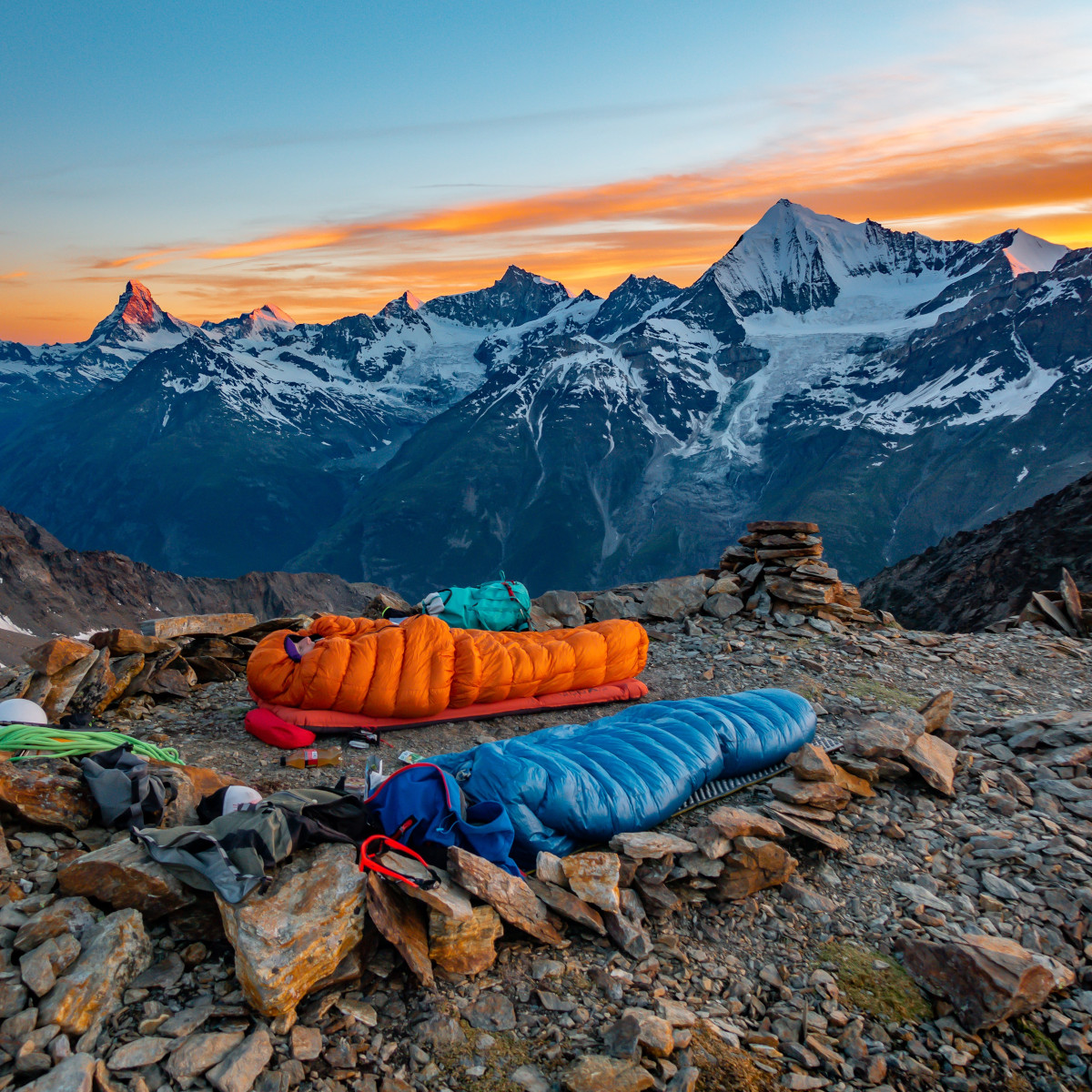
Sleeping in fastpacking is not a prize at the end of the day.
It is a another part of the movement.
You don't arrive to “rest” as in classic trekking, nor do you try to set up a comfortable camp. You arrive tired, with your head still in route mode, and the only thing you need is to get enough sleep to get you moving again the next day.
That's why choosing where and how to sleep matters more than you might think. Not so much because of the weight - which is also important - but because of the type of night that will allow you to have. A bad decision here doesn't stay overnight, it carries over into the next day.
This guide is not about ultralight dogma.
It goes from choose the right tent, tarp or bivouac according to the actual context, not according to what looks best in a photo.
What you will get out of this guide
After reading it, it will be clear to you:
- when it makes sense to sleep in a bivouac... and when it doesn't.
- in which situations a tarp is the best option
- why an ultralight tent can be the smartest choice
- how to reduce weight without compromising rest
- what mistakes tend to turn a “minimalist” night into a long night
Not to sleep less.
To sleep better with less.
The key criteria for choosing «shelter» in fastpacking
There is no such thing as “the best shelter".
There is the most suitable for that particular night.
The decision should not start with weight, but with four very simple questions:
- how many nights am I going to sleep out?
- what weather is reasonable to expect, not ideal?
- what is the terrain like where I am likely to sleep?
- What margin of error do I have if something goes wrong?
Answering them honestly saves you a lot of doubts... and a lot of uncomfortable nights.
Bivouac: the lightest option (and the least forgiving)
The bivouac is, for many, the purest image of fastpacking. Arrive at the end of the day, lie down under the stars and disappear into the landscape.
And yes, when it all fits together, it works very well.
On stable nights, with a good forecast, short routes and clear places to sleep, the bivouac is unbeatable in terms of weight and simplicity. There is no set-up, no ritual. You stop and sleep. There is something very powerful about that immediacy.
The problem is that does not forgive mistakes.
A bad choice of site, a change of wind or an over-optimistic forecast turns the experience into something very different. Cold, damp, discomfort... and a night you never get back.
Bivouacking works when you know exactly what you are doing.
And when you hesitate, it's usually a bad sign.
Tarpthe balance that requires judgement
The tarp is probably the most versatile option... and also the most misunderstood.
When used well, it offers a very interesting balance between lightness and protection. It gives you a margin against the rain, ventilates better than a tent and weighs much less. It also forces you to read the terrain, which fits in very well with the spirit of fastpacking.
But the tarp is not automatic.
It needs practice, good judgement to steer it and some patience at the end of the day. In bad wind or difficult terrain, it can become a headache just when you have the least energy left.
The tarp is a great tool when you are experienced and know when to say “here yes” and “here no”.
Ultra-lightweight tent: sleeping well is also about performance
The tent has long been seen as the “less fastpacking” option.
And yet, on many routes it is the smarter choice.
A well-chosen ultralight tent gives you something that is sometimes undervalued: consistent rest. It doesn't matter if the wind is blowing, if a storm is raging at night or if you arrive at a mediocre place to sleep. You go in, isolate yourself and recover.
On routes lasting several days, in variable weather or when fatigue accumulates, a good night's sleep makes all the difference. Not only physically, but also mentally. You wake up with the desire to carry on, not with the feeling that you have survived the night.
Yes, it is heavier.
But sometimes that weight is energy recovered the next day.
And if you are thinking of carrying a tarp plus a bivy cover, for example, I would recommend that you add up the weights. You'll see that you're already carrying what an ultralight tent weighs.
❌ Common mistakes when choosing where to sleep
Most of them do not come from a lack of material, but from poorly calibrated decisions:
- choose only by weight and not by context
- go too minimalist without experience
- underestimating the night wind
- do not test the system before a long route
- thinking about the night and forgetting the next day
In fastpacking, a bad night's sleep doesn't stay overnight.
It is paid with interest.
Actual bivouac configuration (when to choose it)
When you choose to bivouac, you should do so with all the cards on the table. You can bring:
- jacket adjusted to actual temperature
- breathable bivouac cover
- lightweight mat
- sleeping cap and buff
- very clear weather forecast
Simple rule:
if in doubt, don't bivouac.
It's OK to choose the most robust option. The important thing is to keep moving well the next day.
⭐ What it's like inside Outsiders


Inside we share real configurations, real questions and real solutions.
No theory.
Just distilled experience.
🔗 Keep building your ultralight system
👉 Fastpacking: the complete guide to getting around lightly
👉 What to eat in fastpacking (no cooking)
👉 How to choose an ultralight backpack
👉 How to plan your first route
👉 Fastpacking on the GR11
Fastpacking Quick Guide (Free)

The guide is designed to give you a start without chaos, without doubts and without buying things you don't need.
It includes:
- What to check before leaving
- How to choose your first route
- Which material matters (and which doesn't)
- Typical 90% errors on start-up
- How to move lightly without losing safety
It's free... but it's part of something bigger.
The guide is just the beginning, within the trial you also have the checklist, recommended equipment, resources and the challenge modules to get you up to speed quickly.
📥 Download it here (access with the free trial):
👉 https://www.skool.com/outsiders/about


