Walking fast without burning out: technique and cadence for better movement in the mountains
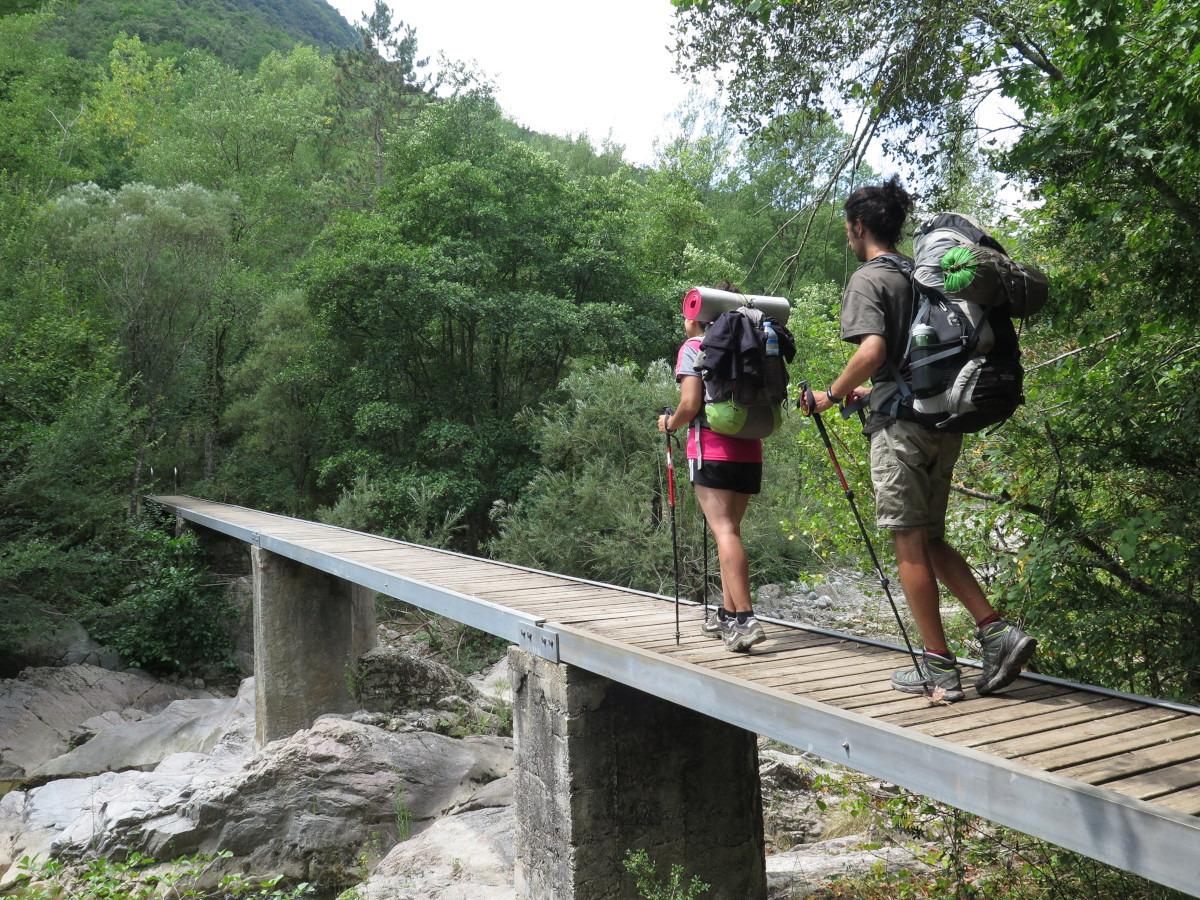
Fast walking is not slow running.
Nor is it forcing yourself to keep a pace that you can't sustain.
In the mountains, most people get burned. not for lack of form, but by poor techniqueToo long strides, erratic cadence, disordered breathing, climbs that are attacked as if they were a sprint... and downhills that destroy your legs.
The fastpacking -and fast hiking, properly understood, is not about pushing harder.
It goes from move better.
This guide is for those who want to move fast without going into the red, maintain a sustainable pace for hours and end the day with the feeling that there was still room for improvement.
What you will get out of this guide
After reading it you will be clearer:
- how to walk fast without triggering heart rate
- why cadence matters more than speed
- which technical errors cause you to waste energy
- how to climb up and down without getting burnt
- how to find your rhythm, not that of others
- why good walking is the basis for fastpacking
Not to go faster by five minutes.
For go better throughout the day.
Before talking about technique: a key idea
Walking fast in the mountains is not a question of strength.
It is a question of economy.
Every unnecessary gesture - one step too long, one tension too many, a chaotic breath - is wasted energy. And when the route lasts for hours, those little wastes take their toll.
Good technique doesn't show when you use it.
It is noticeable when does not burn you.
Cadence: the heart of efficient walking
If there is one concept that makes the difference between walking and walk well, is this.
Cadence is not about going faster.
It is take shorter and steadier steps.
In practice it means:
- shorter stride
- more frequent support
- less impact
- steadier pace
When you take too long:
- loads more legs
- you raise your heart rate
- you lose fluency
A lively but sustainable cadence is what allows you to maintain hours of movement without premature fatigue.
Uphill technique: regulate to gain time
It is uphill that most people get burned... unnecessarily.
Common mistakes:
- attack the climb as if you had to “go fast”.”
- strides
- forced breathing
- constant stops
Fast walking uphill consists of:
- shortcuts
- steady pace
- breathing in rhythm
- accept that the pace slows down, but does not break
Climbing more slowly but steadily is almost always faster than stumbling uphill.
Technique on the flat: fluidity, not power
The flat is where you gain time... or lose it without realising it.
The key here is:
- relaxed posture
- arms accompanying, not tense
- look ahead
- pace you can keep up without thinking
If you find that the flat tires you more than the climb, something is wrong.
Walking well should feel easy in this field.
Downhill technique: protect to follow
The descent is no rest.
It is control.
Fast descent without technique is one of the safest ways to:
- punish knees
- overloading quadriceps
- arrive melted at the end of the day
Basic keys:
- shortcuts
- body slightly forward
- avoid braking
- letting the terrain set the pace
To go down well is not to go down faster.
It is to lower without paying tolls afterwards.
❌ Common mistakes when trying to walk fast
Almost all of them come from the same place: wanting to force.
- try to keep the same pace throughout the terrain
- copying the rhythms of others
- confusing fast walking with suffering
- not listening to breathing and sensations
- over-tightening the body
Fastpacking doesn't start when you speed up.
It starts when you stop fighting the terrain.
🧪 How I work it (in practice)
I don't train speed.
I train the continuity.
I look at:
- if I can keep conversation short
- if my breathing is orderly
- if I get to the top without stopping
- if on the way down I still have control
When that fits, the rhythm comes on its own.
⭐ What it's like inside Outsiders


Inside we share real configurations, real questions and real solutions.
No theory.
Just distilled experience.
🔗 Keep building your ultralight system
👉 Fastpacking: the complete guide to getting around lightly
👉 What to eat in fastpacking (no cooking)
👉 How to choose an ultralight backpack
👉 How to plan your first route
👉 Fastpacking on the GR11
Fastpacking Quick Guide (Free)

The guide is designed to give you a start without chaos, without doubts and without buying things you don't need.
It includes:
- What to check before leaving
- How to choose your first route
- Which material matters (and which doesn't)
- Typical 90% errors on start-up
- How to move lightly without losing safety
It's free... but it's part of something bigger.
The guide is just the beginning, within the trial you also have the checklist, recommended equipment, resources and the challenge modules to get you up to speed quickly.
📥 Download it here (access with the free trial):
👉 https://www.skool.com/outsiders/about


