How to choose a bag and mat for fastpacking (without overpacking)
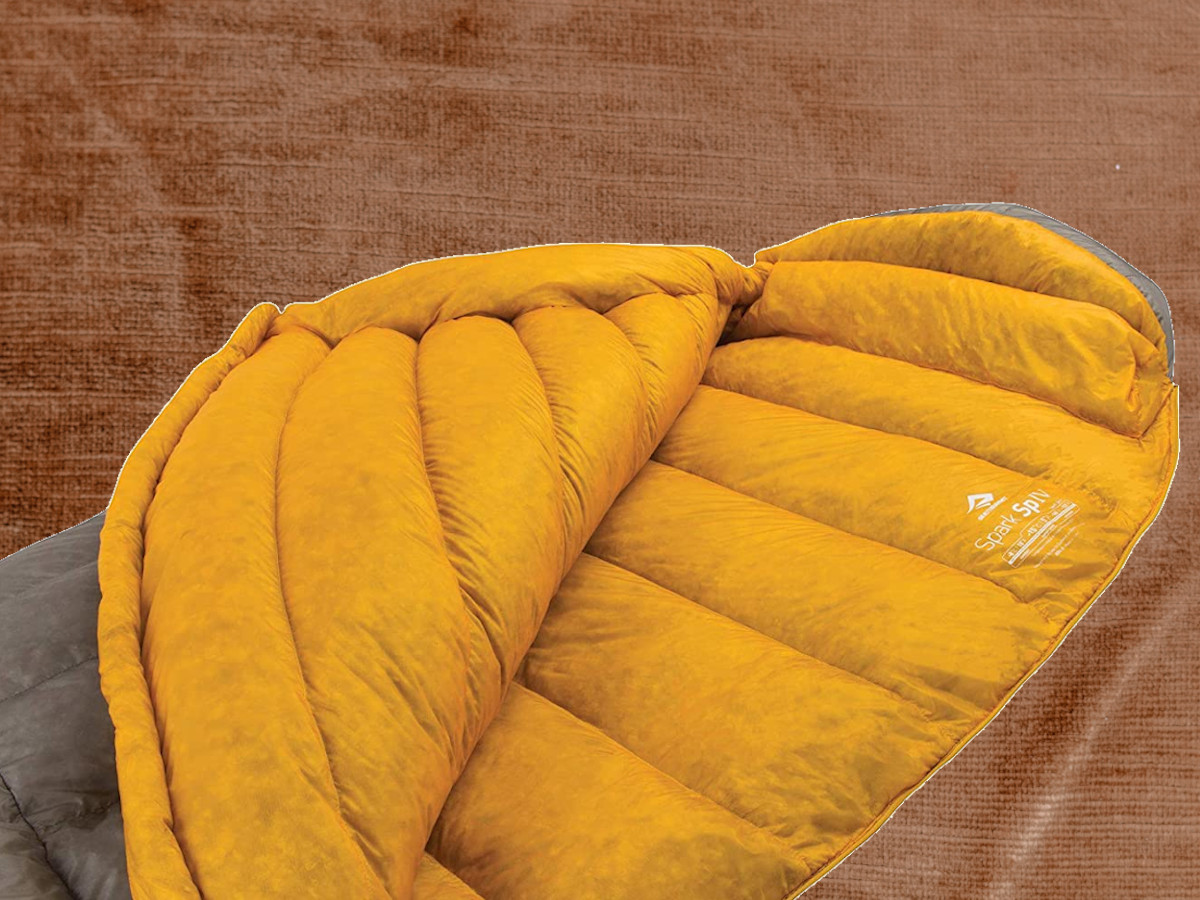
At fastpacking, sleep is not a luxury.
It is part of the performance.
And yet, the bag and mat are often where most of the unnecessary weight accumulates. Bags “in case it cools down”. Oversized mats “for safety”. Systems designed for comfortable camping... not for moving lightly for days at a time.
The result is familiar: a heavier backpack, an awkward pace and a constant feeling of carrying something you only use for a few hours.
This guide is not about fairness.
It goes from choose enough.
What you will get out of this guide
After reading it, it will be clear to you:
- how to choose the right coat without going overboard
- what role the mat actually plays in the heat
- how to interpret temperatures and R-Value without getting confused
- what mistakes cause you to overcharge
- how to adapt the system according to season and route
- how to sleep well without dragging useless weight
Not to sleep worse.
For sleep just enough and keep moving well.
Before going into the material: a key idea
In fastpacking, the sleeping system is not chosen in isolation.
A choice is made as a whole:
- shelter (shelter)
- clothes you wear
- expected weather
- accumulated fatigue
A good bag won't fix a bad mat.
And a good mat does not make up for a poorly chosen bag.
Here everything adds up... or subtracts.
The bag: warm enough, not too warm
One of the most common mistakes is to choose the bag by the lowest number.
“This one can withstand up to -5°C, so I'll be fine.”
The problem is that:
- weighs more
- occupies more
- many nights you don't need it
In fastpacking, it is not the extreme that is important.
It is the real comfort under normal conditions.
Practical keys:
- prioritises comfort temperature, not limit
- think of the most likely night, not the worst imaginable one.
- remember that you arrive tired (and that's hot... to a certain extent).
Sleeping lightly just right is uncomfortable.
Always sleeping in excess is a burden.
Feather vs. synthetic: the well-understood debate
Feather bag
Advantages:
- best heat/weight ratio
- more compact
- ideal for fastpacking
Disadvantages:
- moisture-sensitive
- more expensive
If you take good care of the system and manage the humidity, the feather will is often the best option.
Synthetic bag
Advantages:
- works best wet
- more robust
Disadvantages:
- more volume
- worst weight-to-warmth ratio
It makes sense in very wet weather or short routes, but penalises when you are looking for real lightness.
The mat: the great forgotten of the heat
Many people focus only on the sack.
And therein lies the error.
Much of the cold enters from below.
And that is managed by the mat.
This is where the famous R-Value.
You don't need to memorise numbers, but you do need to understand this:
- the colder the ground, the more R-Value you need
- a good bag on a poor mat is still cold
In fastpacking, a light but sufficient mat is worth more than an oversized bag.
How to combine bag + mat without going overboard
An approach that works very well:
- seasonal jacket
- mat with consistent R-Value
- minimal sleepwear (buff, light thermal layer)
This system allows:
- adjust heat
- reduce weight
- adapt to different situations
It is not a perfect piece.
It is a balanced system.
❌ Common mistakes when choosing a bedding system
- choose bag only by minimum temperature
- ignoring the mat
- wear a double layer “just in case”.”
- not testing the system first
- copy winter bivouac setups for soft routes
In fastpacking, the wrong break is paid for every day.
My criteria for 1-3 day routes
My approach is simple:
- lightweight, seasonally fitted jacket
- reliable mat, without ultra-minimalist obsession
- I'd rather sleep a little lightly than carry too much.
- I always think of the whole, not the piece.
Sometimes the mat is the key.
⭐ What it's like inside Outsiders


Inside we share real configurations, real questions and real solutions.
No theory.
Just distilled experience.
🔗 Keep building your ultralight system
👉 Fastpacking: the complete guide to getting around lightly
👉 What to eat in fastpacking (no cooking)
👉 How to choose an ultralight backpack
👉 How to plan your first route
👉 Fastpacking on the GR11
Fastpacking Quick Guide (Free)

The guide is designed to give you a start without chaos, without doubts and without buying things you don't need.
It includes:
- What to check before leaving
- How to choose your first route
- Which material matters (and which doesn't)
- Typical 90% errors on start-up
- How to move lightly without losing safety
It's free... but it's part of something bigger.
The guide is just the beginning, within the trial you also have the checklist, recommended equipment, resources and the challenge modules to get you up to speed quickly.
📥 Download it here (access with the free trial):
👉 https://www.skool.com/outsiders/about


