How to calculate paces and time in fastpacking (without cheating yourself)
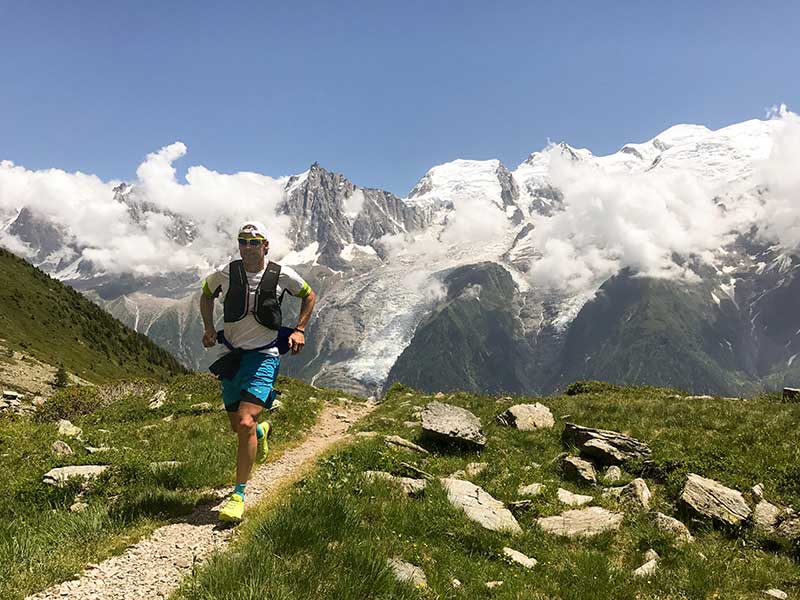
At fastpacking, The problem is almost never distance.
It is the weather.
Affordable“ kilometres that drag on without explanation. Journeys that looked comfortable on the map but in reality take forever. Arrivals at night that were not in the plan. And that all-too-common feeling of “I don't know where my day went”.”.
The mistake is not usually in the legs.
It is in how we calculate rhythms.
This guide is not about magic formulas or unrealistic averages. It is about learning to estimate times honestly, using benchmarks that work in fastpacking and understanding which variables actually change the pace.
What you will get out of this guide
After reading it, it will be clear to you:
- why your time calculations are often wrong
- how to think in hours of movement, not in kilometres
- what is a realistic pace for fastpacking depending on terrain and gradient?
- adjusting expectations before departure
- how to avoid days that get out of hand
- how to plan with margin without going “over the top”.”
Not to go faster.
For arrive when it's time.
Before talking numbers: a key idea
In fastpacking, the pace is not a fixed number.
It is a consequence.
Depends on:
- your physical fitness
- the weight you carry
- the type of terrain
- the cumulative difference in altitude
- how much you stop (and how you stop)
That's why copying other people's rhythms hardly ever works.
What you need is not speed... it's reference.
The most common mistake: thinking km/h
In classic hiking it fails.
In fastpacking, it is straightforwardly misleading.
The same average pace can hide very different realities:
- slow rises
- agile plains
- controlled downward slopes
- poorly managed stops
Fastpacking is best planned when you think about:
- hours of actual movement
- not in total kilometres
This change of focus transforms everything.
Indicative rhythms in fastpacking (not to lie to you)
Without obsessing over exact figures, these benchmarks work for many people:
- Upload: 400-600 m+/h sustainable
- Llano: 5-6 km/h walking fast
- Downloadvery variable (do not count it as a “gift”)
But beware:
these numbers only make sense if you don't stop every so often.
In fastpacking, stopping badly breaks any calculation.
The slope: the great forgotten one
Two 30 km routes have nothing to do with each other if one has:
- 800 m+
and the other: - 2.500 m+
The difference in altitude does not only add up in time.
Sum accumulated fatigue, especially when going downhill.
A good mental rule:
every 1,000 m+ weighs more than it looks on the map.
And they are paid at the end of the day.
Stops: the invisible rhythm
More time is wasted here than we think.
Typical errors:
- stop “for a moment” every so often
- removing and adding layers without criteria
- eating only when hungry
- unplanned long stoppages
In fastpacking, the real pace is not set by how you walk...
but how you manage stops.
Moving smoothly with short, efficient stops is worth more than walking too fast and breaking your pace every 15 minutes.
❌ Common errors when calculating times
- copying the times of others
- rely only on the track
- not counting the technical terrain
- do not add margin
- thinking that “I'll make up for it”.”
- forget that fatigue is not linear
The mountain does not understand optimistic averages.
🧪 How I calculate times (real example)
My process is always similar:
- I define maximum hours of movement for the day.
- I adjust the distance to the slope, not the other way around.
- I assume that the last third will be slower.
- I leave room to decide as we go along.
If the calculation squeezes me too much from home, it almost never gets better in reality.
⭐ What it's like inside Outsiders


Inside we share real configurations, real questions and real solutions.
No theory.
Just distilled experience.
🔗 Keep building your ultralight system
👉 Fastpacking: the complete guide to getting around lightly
👉 What to eat in fastpacking (no cooking)
👉 How to choose an ultralight backpack
👉 How to plan your first route
👉 Fastpacking on the GR11
Fastpacking Quick Guide (Free)

The guide is designed to give you a start without chaos, without doubts and without buying things you don't need.
It includes:
- What to check before leaving
- How to choose your first route
- Which material matters (and which doesn't)
- Typical 90% errors on start-up
- How to move lightly without losing safety
It's free... but it's part of something bigger.
The guide is just the beginning, within the trial you also have the checklist, recommended equipment, resources and the challenge modules to get you up to speed quickly.
📥 Download it here (access with the free trial):
👉 https://www.skool.com/outsiders/about


