From trekking to fastpacking: how to make the transition in 8 weeks (without breaking)
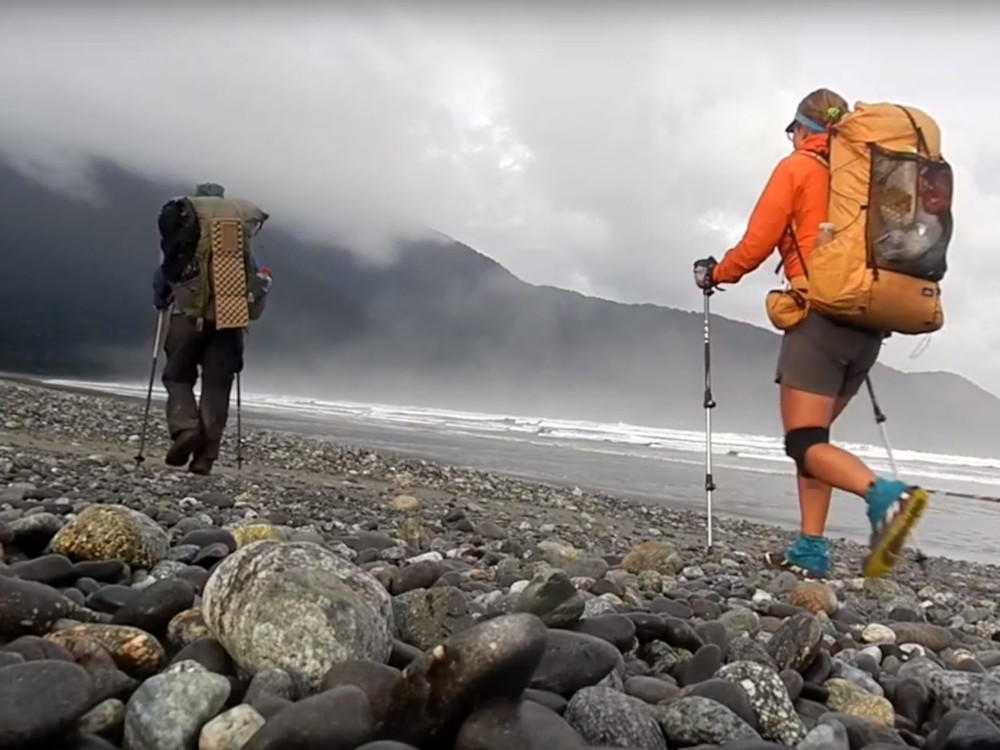
Hardly anyone starts by doing fastpacking.
It is reached.
You usually come from trekking. You like walking, doing long routes, sleeping outside, stringing days together. But there is a moment - subtle, almost unnoticed - when you start to think: What if I could move a little faster? What if I simplified? What if I needed less?
The mistake is to try to make that leap all at once.
Change everything at once: material, rhythm, mentality, expectations. That's where the discomfort, frustration or the feeling that “this is not for me” comes in.
The transition to fastpacking it's not about running anymore.
It goes from learning to move better.
This guide offers a realistic 8-week progression from trekking to fastpacking in a natural, sustainable and enjoyable way.
🎯 What you will achieve with this guide
If you're somewhere in between, you'll find it here:
- a clear way to get you started in fastpacking without forcing yourself
- a logical progression, step by step
- less fear of “not being ready”
- more confidence in your body and your decisions
- a transition that respects your previous experience
- clarity on whether fastpacking is right for you
It is not a training plan.
It is a change of approach.
🧭 Before you start: an important idea
Fastpacking is not a higher level of trekking.
It is another way to experience the route.
It's not about going faster for the sake of it:
- reduce friction
- simplifying decisions
- maintain flow
- gaining mental and physical lightness
That's why progression doesn't start with the legs.
It starts in the head.
Weeks 1-2: Simplify without changing the pace
The first few weeks are not about running.
It is about remove.
The focus here is on:
- check your backpack
- questioning every “just in case”
- reduce weight without changing distances
Go for a walk as usual, but:
- with less material
- with clothes that fit more closely to the movement
- stopping less time
The aim is not to go faster, but to feel freer.
Weeks 3-4: walking with intention
Now you really start to notice changes.
You don't change the routes yet, but yes:
- the rhythm
- continuity
- attention to the field
Introduce stretches of brisk walking, play with walking sticks if you use them, and start to think about time in motion, not in kilometres.
Here a new sensation appears:
the route starts to flow.
Weeks 5-6: adapting the body (and the head)
At this point, the body has already understood the change.
It is a good time to:
- reduce backpack volume
- trying out more agile footwear
- introduce some basic strength
- to chain two days in a row
It is not about suffering more, but about recovering better.
Sleeping, eating and managing effort really start to matter.
Weeks 7-8: your first fastpacking route
You are no longer “testing”.
You are choosing.
Here you propose a short fastpacking route:
- 1 or 2 nights
- simple layout
- margin of error
- clear escape
Don't look for epics.
Search consistency.
If at the end you think “I could repeat tomorrow”.”, you are on the right track.
❌ Common mistakes in this transition
In almost all cases, the problem is not physical:
- wanting to run before walking well
- change all the material at the same time
- copying other people's rhythms
- compare yourself with more experienced people
- to think that fastpacking = suffering
Fastpacking starts when you enjoy the movement, not when you force it.
🧪 What my transition was like (in a few lines)
I didn't start by running.
I started walking lighter, stopping less and listening more to my body.
For months I didn't call myself a fastpacker.
It just made routes simpler, more fluid, more mine.
The name came later.
⭐ What it's like inside Outsiders


Inside we share real configurations, real questions and real solutions.
No theory.
Just distilled experience.
🔗 Keep building your ultralight system
👉 Fastpacking: the complete guide to getting around lightly
👉 What to eat in fastpacking (no cooking)
👉 How to choose an ultralight backpack
👉 How to plan your first route
👉 Fastpacking on the GR11
Fastpacking Quick Guide (Free)

The guide is designed to give you a start without chaos, without doubts and without buying things you don't need.
It includes:
- What to check before leaving
- How to choose your first route
- Which material matters (and which doesn't)
- Typical 90% errors on start-up
- How to move lightly without losing safety
It's free... but it's part of something bigger.
The guide is just the beginning, within the trial you also have the checklist, recommended equipment, resources and the challenge modules to get you up to speed quickly.
📥 Download it here (access with the free trial):
👉 https://www.skool.com/outsiders/about


