

3,500 calories without a cooker: the cold food system that Lau designed for the GR11.
Pyrenees and mountains 📩
Here 🔥There are conversations that start with a technical question and end up revealing an entire philosophy. This is what happened when I asked Lau about his GR11 food backpack. I was expecting a list of energy bars and freeze-dried food. What he told me was far more interesting.
Lau -Lau La Montañas on youtube- I had planned the Pyrenean crossing without a cooker. No cooking. No waiting for the water to boil. The jetboil stayed at home. Not out of purism ultralighter or whatever the hell we call it now, but for a very concrete reason, every gram you don't carry is energy you don't expend, and over a multi-week route that equation adds up. The question then was not what to cook, but how to reach 3,500 calories a day without turning on the cooker.


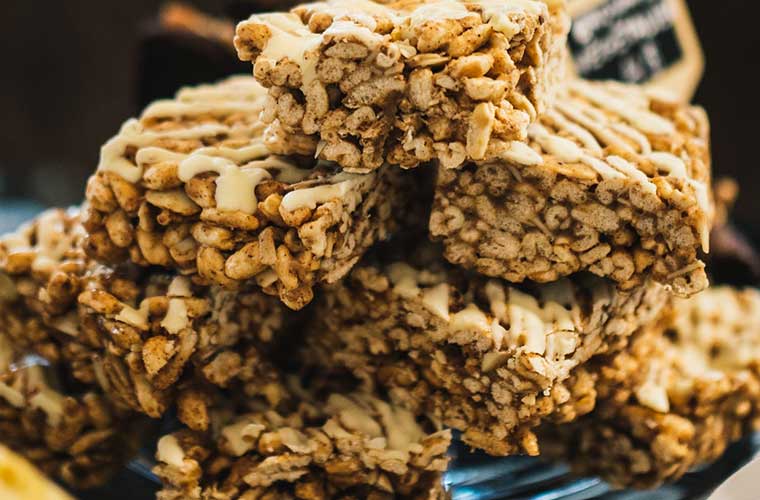
The «cold feed» system on the road
The basis of breakfast is oatmeal mixed with chocolate chip, all pre-mixed and portioned in bags from home. One hundred grams of oatmeal is about 400 calories, the chocolate chip pushes it up to about 700. Add a 200-calorie replacement shake and you start the day with almost 900 calories already in you before you take the first serious step of the day.
Mid-morning nuts come in: a mixture of cashew nuts, seeds and dates. It's not a whim. Cashew nuts provide almost 800 calories per 100 grams according to Lau, dates offer fructose that is absorbed gradually - very different from the quick hit of a gel - and the seeds provide chewy volume, that little trick to the brain that helps you feel satiated. Everything is at your fingertips, for non-stop snacking.
Noon, a complete replacement shake. At the end of the first big stage of the day, the sports shake: 849 calories. And if the physical or mental slump comes - in an emergency, let's say - Lau turns to C4, a pre-sports shake with caffeine and creatine that he describes as «a muscular and mental boost» for when the head starts to make more noise than the legs. This in exceptional cases.
For dinner, couscous. Spiced from home with salt, turmeric and black pepper - a natural anti-inflammatory that she takes knowingly, not out of fashion - and rehydrated in about ten minutes with water. If there is a village nearby, a can of tuna. If not, couscous alone. Nourished you are the same, she says.
The result is a system that fits in your rucksack, does not depend on infrastructure, and closes the day at around the 3,500 calories your body needs on the road - note here that every body is different and you may need a few calories more or less.
Eating when you're not hungry
One of the things that struck me most in my conversation with Lau is her discipline with her eating schedules. Every two hours, whether you are hungry or not. No negotiation.
The reason is physiological - it takes your body 45 minutes to an hour to start processing what you've eaten. By the time your stomach tells you it's hungry, the muscle has already been feeding on reserves for a while. If you wait until you're hungry to eat, you're always a step behind. And in the mountains, that delay is paid for with fatigue, with heavy legs, with that feeling that something is wrong even if you have slept well and the terrain is not particularly hard.
This, moreover, can be trained. Lau has been working on it for years doing ultras and long bike rides. The stomach, under physical strain, reduces its absorption capacity because the blood supply is diverted to the muscles. Getting it used to receiving and processing food while the body is working is as important as getting the legs used to the slope. And it is done in the same way, with repetition, patience and going out to train even if you don't feel like it.
The bird that nobody tells you about
At some point in the conversation, the story of the mid-stage cane that I took one day on the GR11 came up. A stop at a refuge, euphoric atmosphere, group warmth. A beer. And half an hour later, the muscles were saying enough.
It is not anecdote. It is chemical. Alcohol first causes a rapid rise in glucose that the pancreas neutralises with insulin, then generates a more pronounced drop in sugar than before drinking. In a muscle that is already working close to its glycogen stores, that dip can take 30 to 45 minutes to resolve. During that time you feel heavy, sore, mentally dull. The blah doesn't always come from not eating enough. Sometimes it comes from eating the wrong food at the wrong time.
And from that day on, such a luxury - that of having a beer - I reserve for the end of the day, if necessary.
What you can't see on the scales
In conversation we mentioned something that seems to me to be one of the most underestimated aspects of long distance running: bone demineralisation. Research cited in the trail and long-distance hiking world has documented bone density loss even in young, well-trained people who have been on the road for weeks. The mechanism is the same as that observed in astronauts - when the diet does not provide enough minerals, the body draws them from the bone. That's why complete micronutrient shakes are not a gym supplement taken into the bush. They are the safety net that covers what a field diet, however well planned, inevitably leaves uncovered. I leave here link to the video in which he reacted to the study (How trekking TRANSFORMS your body).
Rhythm as a caloric tool
There is a detail of Lau's cold food system that is much more important than it seems. Continuous slow walking expends fewer calories than fast walking with stops. Not just because you are covering fewer kilometres per hour, but because keeping your heart rate in the low zone means that your body is mainly using fat for fuel, which is plentiful, rather than glycogen, which is limited. On technical or hilly terrain the heart rate inevitably rises and carbohydrates become the main fuel. Knowing this allows you to adjust your carbohydrate intake according to the profile of each stage, not your appetite.
Lau lost one kilo in the whole journey. Just one. On a weeks-long route, with the accumulated physical wear and tear that implies, it's almost a laboratory result. It wasn't luck. It was that the machine never ran out of fuel.
The full video is above. It's well worth a listen.


