

GR11 fastpacking style. Moving lightly in the Pyrenees from sea to sea

Pyrenees and mountains 📩
Here 🔥I wake up in the early hours of the morning. The world is still half asleep, but my legs are already awake. The mist hangs between the peaks and muffles the sound of the valleys. The first rays of sunlight touch the rocks and grassy slopes, as if carefully feeling out what kind of day it's going to be. The rucksack is light. Just the way I want it. Today I keep moving along the GR11, GR11 style. fastpacking. It is not just hiking. It is not trail running without further ado. It is moving with intention. With lightness. With attention. With respect for all that this mountain range has to offer.
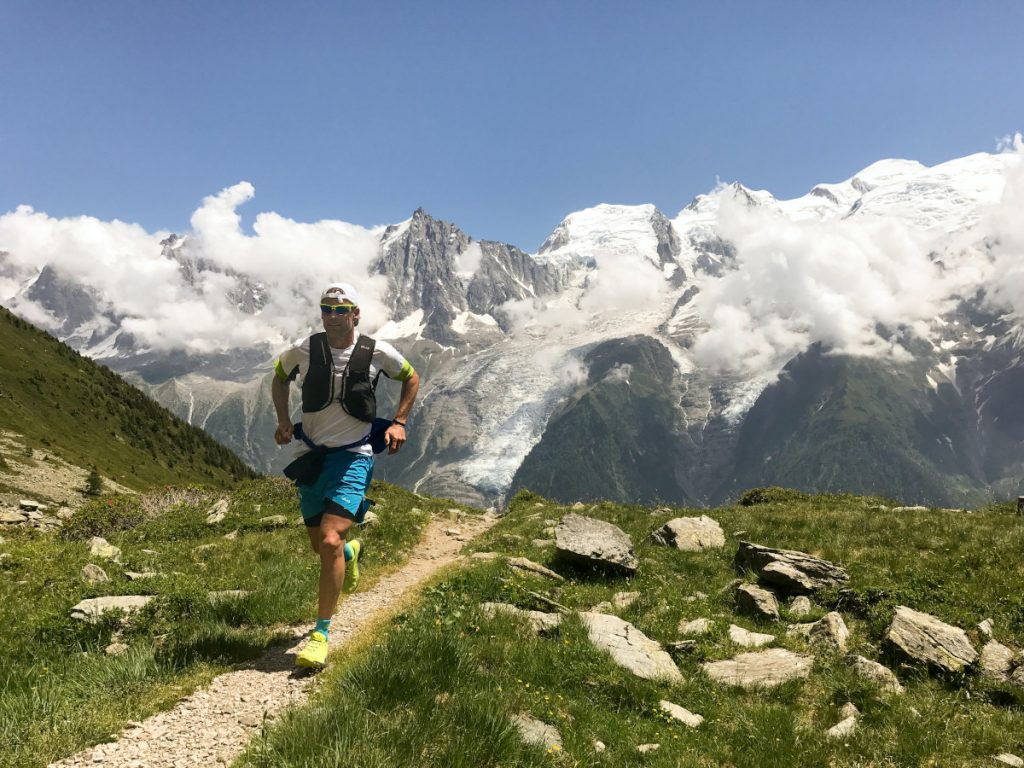


The GR11 is not just any route. It is the backbone of the Spanish Pyrenees: from Cape Higuer, on the Atlantic coast, to Cap de Creus, in the Mediterranean. Approximately 840 kilometres, with a cumulative difference in altitude of 44,000 metres. A line that crosses valleys, climbs rugged passes and skirts silent mountain lakes. A trail that not only takes you through the landscape, but also through yourself. This route has gripped me, it's got deep into my body and my head, and it has never let go of me since.

First love
My first GR11 adventure felt like falling in love. In two stages I walked and ran the route, with minimal baggage and curiosity to the max. I discovered what it's like to let your days be completely marked by movement, light and altitude. Sometimes running, often walking, always alert. The sun rising over bare ridges. The wind roaming at ease on the hills. The silence, broken only by my breathing and the rhythm of my steps.
The fastpacking Even then it seemed to me to be the logical continuation. Not going faster for the sake of going faster, but faster because it brought me closer to the essence. More fluidity. More presence. Less ballast. By moving lighter, space opened up to really absorb the landscape, without getting lost in it.

The fastpacking as a state of being
The fastpacking For me, it's not a discipline with fixed rules. It's a way of being in the mountains. I move faster than a classic hiker, but without the performance pressure of an ultramarathon. My days are long, my pace contained. I run where I can, walk where I can, climb, descend, slow down and speed up. Sometimes for hours at a time without meeting anyone.
Everything revolves around rhythm. A cadence in which body and landscape merge. Without forcing, but without stopping either. Fluidity is the key word. On the GR11, where for days there are passes and valleys one after the other and the weather can change in a matter of minutes, this rhythm becomes an anchor. Movement becomes the axis of your existence.
FKT dreams and confrontation
After my first complete experiences on the GR11, a new dream was growing: a Fastest Known Time. Complete the route as quickly as possible, in the mode self-supported, Not for the sake of being on a website, but as an experiment. Not for the sake of a website, but as an experiment: what happens when I gather all I have learned about moving lightly, concentration and self-sufficiency in this one path?
I trained, planned and travelled to Spain with a burning desire. But the mountains don't just laugh at ambition. Snow, avalanche danger, cold and navigation problems tested me from the start. A few hundred kilometres into the route, I noticed that my lucidity was fading. I became disorientated, lost time and felt that going on would be foolhardy. I turned back.
I did not experience it as a failure, but as a lesson. The fastpacking at this level demands much more than light equipment and strong legs. It demands mental anchoring, constant attention and a willingness to abandon your plans when circumstances require it.

Spartan and stinky
One of my adventures on the GR11 started in a spartan way and with a smell that was not exactly pleasant. Lots of snow, few hikers and a body that had yet to get into the rhythm. That day I felt everything at once: ecstasy, discomfort, surprise and pure freedom. Right there, in the midst of that discomfort, I understood what the fastpacking on the GR11. It is not comfortable. It is not always beautiful. But it is real. The route strips you of everything superfluous. Physically and mentally. You learn what you really need to keep going. Everything that doesn't contribute to movement, safety or attention ends up falling under its own weight.
Minimalism that creates space
The less I carry, the more I experiment. It sounds like a cliché, but every crossing confirms it. My running pack, usually a 20 or 30 litre Rab Veil XP. -the latter loaded to a maximum of 25 litres- fits like a second skin. No bulky hip belts, no dangling straps. It moves with me over narrow ridges, steep descents and stony fields.

I carry a Rab Ridge Raider Bivi ultralight as a shelterNo frills, but reliable protection against weather and wind. For the night I wear a light sleep system, the Mythic Ultra 120 Modular with Ultrasphere 4.5 Sleep Mat, perfectly adapted to cool summer evenings at altitude. The clothing is fair, but chosen with care for the trail running. As additional layers for the road I carry a insulating base layer, a windbreaker and an insulating jacket. running waterproof and windproof. They offer warmth and protection when the weather turns, without adding unnecessary weight. All compact, functional and ready to keep me moving light and free day after day.

The feeding is compact and calorific. Eating as pure fuel. I carry water in soft flasks and replenish it on the march in mountain streams, my lifeline. Without water, there is no life.
The navigation is more than just technology. The watch, digital maps and GPX routes help me, but my main tool is still my own orientation. For emergencies I carry a first aid kit, a headlamp, an emergency bivi and my mobile phone. Not to look for risks, but to be able to deal with them.
Minimalism is not an aesthetic aspiration. It is functional. Everything I carry should contribute to autonomy and freedom of movement.
Light, never lightly
The Pyrenees are capricious. Even in the middle of summer. Hot in the valleys, cold in the passes, fog that reduces visibility to just a few metres. The fastpacking It therefore means being prepared at all times. Keeping warm and dry is not a luxury, it is a necessity. Hypothermia sets in quickly when fatigue, wind and humidity come together.
My decisions are always a balance between weight and safety. I know my equipment, my body and my limits. And I know when to adjust the plan.
Rhythm, routine and reflection
My days start early, often before dawn. I move steadily forward, with no daily distances locked up tight. Sometimes I stop at a spring to replenish my water supply. Sometimes I stand still for a moment at a lookout point, just to watch. These moments are essential. The fastpacking is not to flee, it is to understand. Listening to what the landscape has to say.
On long days, when the body suffers and motivation wanes, the fastpacking It forces you to reflect: what do I need today to move forward? Sometimes it's to keep going. Sometimes it's to slow down. Sometimes it's to turn back. Boundaries are not the enemy. They are an interlocutor.

Alone with myself
The fastpacking alone amplifies everything. Silence becomes thicker. The responsibility becomes heavier. Every decision falls on me. There is no one to share doubts with and no one to hide mistakes. That demands lucidity and honesty. But it is precisely this solitude that makes the experience intense and clean. I learn to listen. To time. To the terrain. To my body. To my head.
Mental lows are part of the game. Endless climbs in the heat. Rain that soaks everything. Nights in which the wind shakes the bivi. At such moments, all romanticism disappears. The fastpacking It becomes a dialogue with myself: Why am I here, what moves me? These questions are not an obstacle, but part of the process.
Mountains as teacher
The Pyrenees are not a decoration. They are an active force pushing in the opposite direction. Snowfields in July. Sharp ridges with a free wind. Valleys where the fog never stops lifting. Moving lightly I become more sensitive to everything that changes. I smell the storm before it breaks. I watch the light change while still looking for a place to spend the night. The fastpacking makes me part of this system. Not above it, not outside it, but within it.
From sea to sea
This summer I am returning to my beloved Pyrenees for my Pyrenean Triple Crown Adventure: three complete crossings from coast to coast through the Pyrenees. The three great lines over the same mountain range. The GR11 is an essential part of this. From the salty waters of the Atlantic to the warm blue of the Mediterranean. And again and again back to the mountains.
The moment I reach the sea is not an end point, but a transition. The real adventure is in the days in between. In the journey. In the movement. In the attention.

More than speed
The fastpacking on the GR11 is not a race against the clock. It is an invitation to go deeper. It is a way of experiencing the route, not just walking it. It is a dance between lightness and attention, between rhythm and silence, between effort and contemplation.
Who walks this path in style fastpacking invites himself to move not only with the landscape, but also with himself. Go light. Walk deep. And let the GR11 speak to you, as it has done with me and will do again when I take my first steps again this summer, by the sea.
Fastpacking is not about going faster. It's about going lighter.
If you come from classic trekking, this is the next step: learning to move with less weight,
more fluid and enjoying every kilometre more.
Join the Outsiders Newsletter and start discovering what lightness feels like.


