

Mountain Safety. How to minimise risks in canyons and caves.

Pyrenees and mountains 📩
Here 🔥When planning an activity, whether it is a canyon, cave, via ferrata, etc., we must take into account some previous factors.
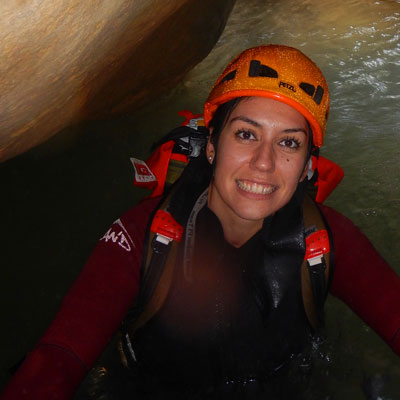
Canyoning safety
1. CHECK THE WEATHER the days before and the day of the canyoning. With this we can be sure if we have a window of good weather to be able to do it without worries, or how the rains will be affecting the river. Nowadays we have many weather apps to check the weather, and we can also look at flow rates on different reference websites or blogs on social networks such as Infocaudales. We can also consult the SAIH Ebro website and check the status of the flows, or ask companies in the area.
In the case of continuous rainfall, it is best to cancel the activity and look for a plan B, either a dry canyon or a change of activity. Keep in mind that, after torrential rains, rivers wash away everything and change their current state, sometimes leaving severe changes in the gully: they destroy equipped headwaters, silt up gravel pools or move logs, which could generate new water movements that were not known before, thus causing new siphons or areas where you could jump before and after the rains you can no longer do so.

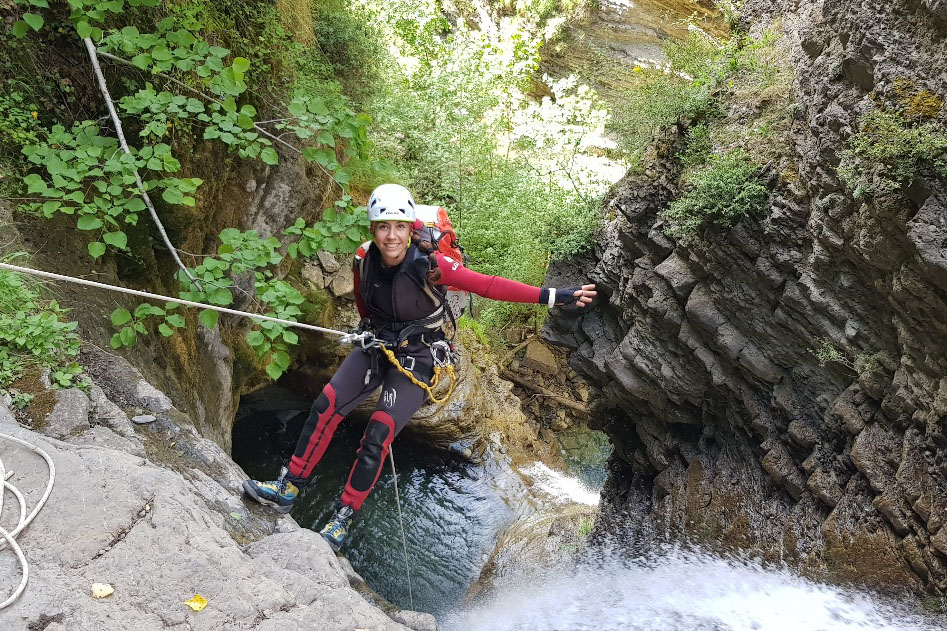
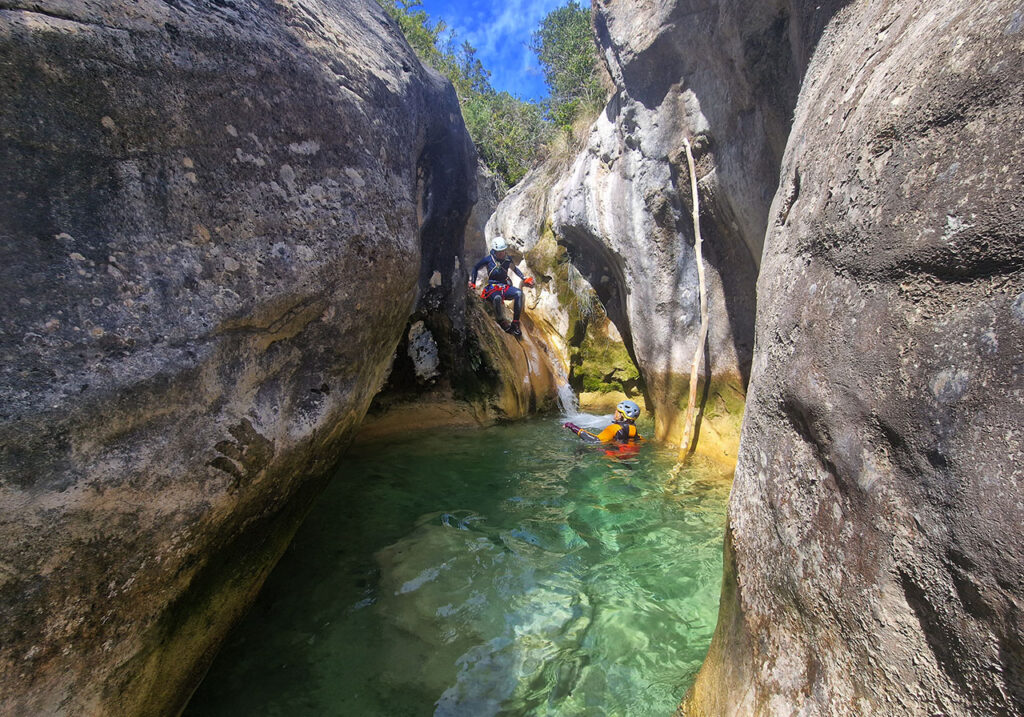
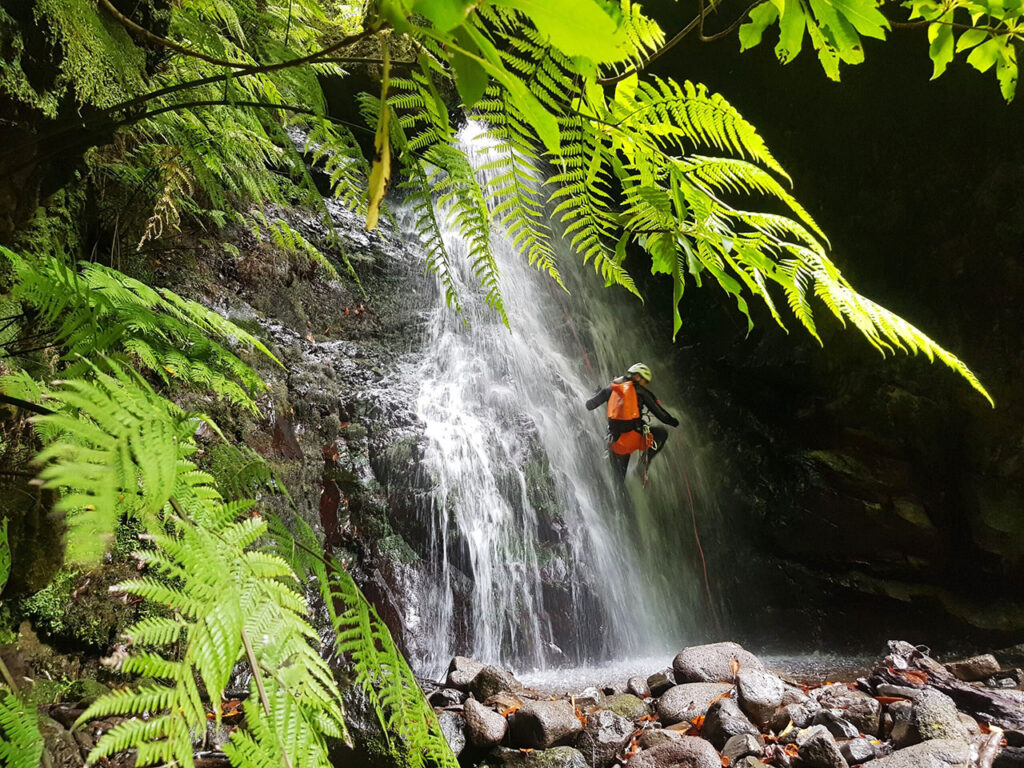

Melting snow also severely affects riverbeds, given the amount of water they usually carry when the snow begins to melt, as well as avalanches, moving blocks or logs out of place and destroying whatever they drag along in their wake. In addition to this, we must bear in mind that, after the rains, the ravine can suffer landslides and we could be caught inside it, so it is always better to wait a few days to do it after the heavy rains and floods.
Security in caving
Especially when we are going to make caves with an active water course, we must also assess the current state of the flow of the cave and the rains of the previous days, as these will significantly affect the cave. Once inside, they could block a passage, flood or find siphoned passages through which we must advance in order to be able to complete it. When there is heavy rain, neither the cave nor the ravine should be visited.

2. APPROPRIATE MATERIAL. We will try, as far as possible, to bring the right equipment for canyoning and caving, which is approved and complies with European standards. Forget about cheap equipment from AliExpress or hardware stores, which do not meet the standards and do not guarantee that they have passed the regulations. Nor is it advisable to buy second-hand equipment, as you don't know if it is sold out of date or what its previous life has been like. Your life is at stake; my recommendation is that you buy your technical equipment in mountain shops, where you will receive professional advice.
3. PREVIOUS TRAINING. Acquiring knowledge and technical training courses for canyoning and caving is essential. We are practising risk sports in the natural environment, a changing and hostile space where all the resources and knowledge will be necessary to progress. This type of sport requires certain skills, as well as experience and knowledge of the environment. If you want to become an autonomous canyoneer or speleologist, you should take the Level I and II courses and the Self-rescue courses. For the more experienced, there are also courses in Technical Improvement, Large Verticals, Cave Climbing and Underground Topography. Get trained if you want to practice them!

4. STATE OF THE EQUIPMENT. It is advisable to make sure of the condition of the handrail, abseil and well equipment, both in the canyon and in the cave, before doing them. You can check this on social networking forums, such as Infoequipamiento on Facebook, or consult companies, organisations and clubs in the area. In some caves we must be very careful, as sometimes we find fixed ropes inside that could be defective or have been removed, so we could get trapped inside. We should make sure to take a rescue rope to our activities, in addition to the ropes indicated in the topography or outline, as this can save us in a hurry or replace those that we find in poor condition. It is also a good idea to carry ropes and abandonment or reinforcement material (maillons, for example) for headers that may be in poor condition, both in canyons and caves, and even re-equipment and installation material.

5. BOTTOCKETS. Our first aid kit should be complete and well prepared, and should contain the essentials for first aid:
- Physiological saline solution and povidone iodine antiseptic, for cleaning and disinfecting wounds.
- Sterile gauze and/or wound dressings.
- Scissors and tweezers, in case we need to cut something or remove a small foreign body.
- Band-aid, which is used for various purposes: to fix bandages, dressings and gauze, to immobilise possible fractures or dislocations, to protect wounds, etc.
- Some medication, with special care when administering it, especially if we are not health workers and do not know if the injured person has allergies. We could take some anti-inflammatory medication, paracetamol, cortisone ointment or tablets, cold gel, etc.
- Plasters or Compeed for chafing and some cream for insect bites.


6. LOGISTICS AND PLANNING OF THE ACTIVITY. Good planning of the activity beforehand is necessary for successful completion:
- Make sure if the activity we are going to carry out has regulations or prohibitions on the dates planned, and if we have to ask for permits from the corresponding entities.
- Bring a topographical map of the ravine or cave, either printed and laminated or on your camera.
- Advise colleagues of the time of arrival and departure, being considerate with the times, as unforeseen events may arise that may lengthen the activity.
- Carry a mobile phone and, if possible, an external battery (power bank), as you may run out of battery power, especially at low temperatures.
- Carry GPS, downloaded tracks of the route, map of the area and compass.
- Choose your activity partners wisely, who are of a similar level to you or somewhat higher.
- Carry some spare clothing and an emergency headlamp, as well as individual safety equipment (hot spot, candle, thermal blanket, etc.).
- Bring plenty of water for hydration during the activity and/or mineral salts, and some snack food if it is a very long activity, or nuts, energy bars or dried fruit for the road.


