

Camino de Santiago: A perfect route for hiking enthusiasts
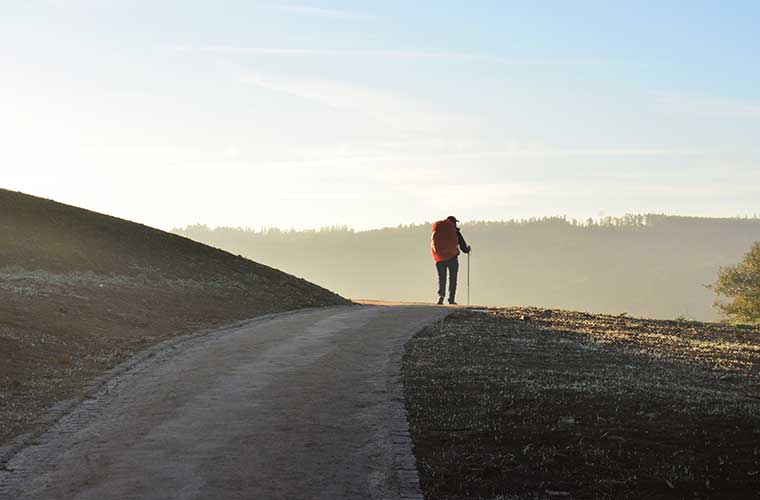
Pyrenees and mountains 📩
Here 🔥In recent years, the The Way of St. James has acquired such importance that many, both experienced and less experienced hikers, embark on this experience, which is not only cultural but also spiritual and transformative. Undertaking the Camino has two components you cannot ignore: on the one hand, it requires minimal prior physical preparation, along with the corresponding logistics and mindset, and on the other, it is an experience that transforms and brings one closer to the spiritual world. All pilgrims agree that something inexplicable guides them along the entire path. There are several routes, and here we will explain which ones they are and provide a technical analysis so that the path can also be enjoyed by pilgrims who are experienced long-distance hikers.
Free guide
Camino de Santiago 101
Prepare your first Camino with a quick guide in English and a free community led by a local living on the French Way.
👉 Get free access to Camino 101Things to consider when doing the Camino de Santiago
For an average hiker, the Camino de Santiago has, as we've been saying, both a spiritual and cultural component, whereas for an experienced hiker, it's a route that, no matter which one you choose, has a special topography only found on the Iberian Peninsula.
In both cases, it's important to consider:
- The orography of the route
In many high mountain areas, the inclines are constant and the daily path becomes a challenge between trails, forest tracks and stretches of asphalt, meaning the footfall is very different on each route. In this case, footwear is key to maintaining stability and a good pace throughout each stage.
- Backpack and weight
The Camino de Santiago allows you to carry a well-balanced weight to have the necessary supplies for each stage and everything you need depending on the months of the year in which it is undertaken.
- Good signage
These are well-signposted, heavily-trafficked routes that are interconnected with other paths.
Types of routes or paths
Santiago de Compostela can be reached by walking, along different routes. On the one hand, there is the French Way The most popular is the one with the best infrastructure. In second place is the Camino del Norte, this route follows the Cantabrian coast. And then there is the Camino Primitivo. There is also the Camino by bike or the Camino from Tui (Portuguese Way).
Any of them is an excellent option depending on your needs or what you want to experience. For this, there are professionals who can guide you in the best possible way. Prepare yourself to live an adventure full of meaning and listen to what your body tells you at each stage.
Ultimately, there are many routes and many experiences that position the Camino de Santiago as a challenge for anyone, as well as for experienced hikers. It is a test of survival and a direct contact with nature. A perfect setting to undertake with the perfect gear and have a unique and unrepeatable experience.
 Spanish
  English
  French