

La Alta Ruta Pirenaica (HRP): la travesía indómita de los Pirineos

Pirineos y montaña 📩
Aquí 🔥Editorial: Desde Travesía Pirenaica, nos emociona compartir esta aventura firmada por Geert van Nispen, uno de los referentes europeos en autosuficiencia y larga distancia en montaña. Su reto: unir GR10, GR11 y HRP en un solo viaje. Aquí su relato, en primera persona.
Este artículo es una traducción autorizada del original publicado por Geert van Nispen en su página web: HRP: De ongetemde lijn door het hooggebergte
Tres rutas. Una cordillera. Una misma historia
La aventura de la Triple Corona Pirenaica para la que ahora descanso, vuelvo a entrenar y me preparo, ha sido aplazada. A veces una aventura no exige acelerar, sino tener paciencia. Precisamente por eso vuelvo a las tres rutas legendarias que forman la columna vertebral de esta cordillera: el GR10, el GR11 y la Haute Route Pyrénéenne. A dos de ellas regreso a través de los recuerdos; a la tercera, sobre todo, a través del deseo. El GR10 y el GR11 los he recorrido de extremo a extremo. La alta ruta, la HRP, solo la he conocido a través de fragmentos, aunque suficientes para comprender que nunca se deja descubrir por completo.
📋 La «Triple Corona Pirenaica» es un concepto inspirado en la renombrada «Triple Crown» del trekking en Estados Unidos. La Triple Corona estadounidense es un desafío que consiste en completar tres de las rutas de larga distancia más icónicas del país: el Pacific Crest Trail (PCT), el Appalachian Trail (AT) y el Continental Divide Trail (CDT). Estos senderos suman más de 12,000 kilómetros a través de algunos de los paisajes más impresionantes de Norteamérica. AQUÍ TODA LA INFORACIÓN SOBRE LA RUTA.
Esta es la historia de esa tercera línea. No como ruta, sino como posibilidad. La HRP. La línea indómita que atraviesa el corazón de la alta montaña.
No es un sendero, sino una idea
La HRP no comienza con un paso, sino con una toma de conciencia. Mientras que el GR10 y el GR11 se dejan seguir mediante marcas, guías y etapas definidas, esta línea escapa a todo eso. No existe un inicio oficial ni un final claramente establecido. Lo que sí existe es una idea: avanzar de forma continua por las zonas más elevadas de los Pirineos, lo más cerca posible de las crestas y lo más lejos posible de la comodidad.
Por eso la HRP no se siente como una ruta que se empieza, sino como algo en lo que uno acaba entrando poco a poco. No está hecha de certezas, sino de decisiones. No está formada por senderos, sino por conexiones entre puntos que, en ocasiones, solo existen sobre un mapa. Precisamente por eso parece elevarse por encima de la cordillera. No al lado de los GR, sino por encima de ellos.


Fragmentos de alta montaña
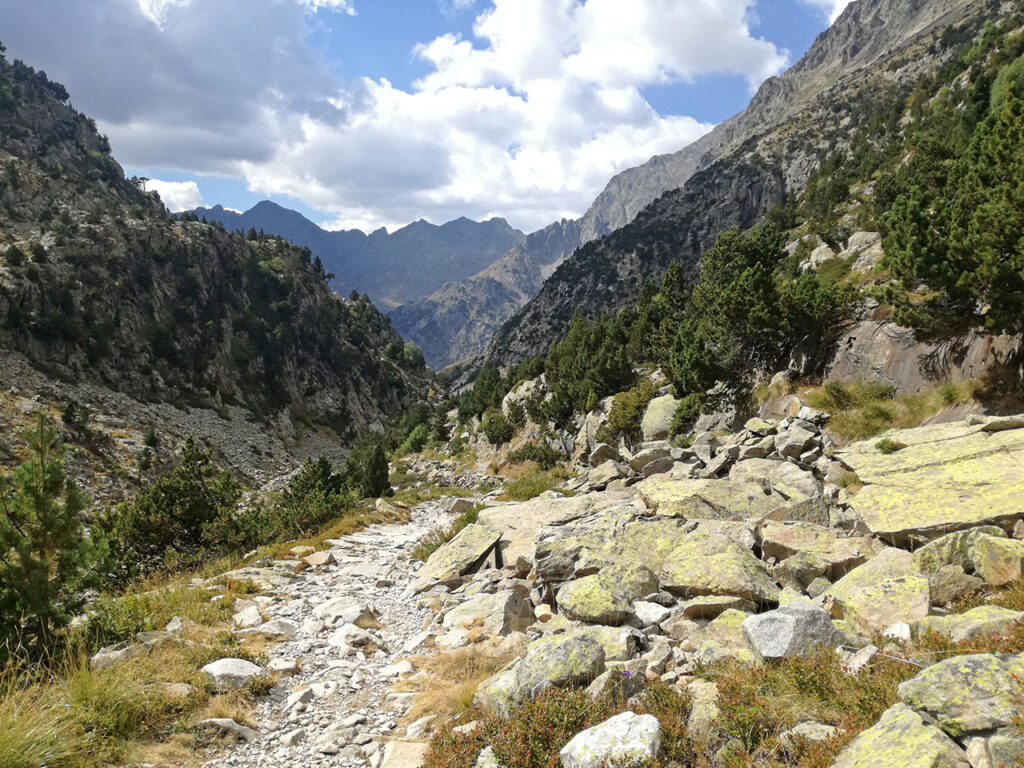
Mi experiencia en la HRP está formada por fragmentos. Días aislados. Collados dispersos. Momentos en los que el sendero desaparece y solo queda la dirección. Y, aun así, esos fragmentos han bastado para sentir hasta qué punto esta línea es diferente. Aquí nada se suaviza. No hay camino marcado que sirva de guía. Solo roca, altitud y espacio.
A diferencia del GR10 y del GR11, aquí no existe un ritmo que se adquiera de forma natural. Cada jornada exige una adaptación constante. Al tiempo. Al terreno. Y a las propias capacidades. Lo que ayer funcionó puede resultar excesivo hoy. Por eso la HRP no puede planificarse en el sentido clásico de la palabra. Exige preparación, pero no acepta guiones.

La altitud como constante
Mientras que el GR10 es verde y el GR11 abierto y seco, la HRP vive en altura. De forma continua y prolongada. Los paisajes son más ásperos y desnudos. Los bosques desaparecen. Los pueblos se vuelven escasos. El agua puede ser abundante o completamente inexistente. Y eso cambia también la forma de avanzar.
La velocidad pasa a un segundo plano. Lo importante es la estabilidad. Cada paso requiere atención. No porque el terreno sea extremadamente técnico, sino porque el margen de error es reducido. Aquí los errores cuestan más que tiempo. Cuestan energía, concentración y, en ocasiones, seguridad. Por eso la presencia deja de ser una actitud mental para convertirse en una necesidad.
Navegar a través de la incertidumbre
La HRP no está señalizada como un sendero GR. A veces aprovecha caminos existentes. Otras veces desaparece cualquier rastro y solo quedan el mapa, la brújula y la capacidad de leer el terreno. La navegación deja de ser una ayuda para convertirse en una habilidad esencial.
Esa incertidumbre se extiende a todo. A la hora de salir. A la distancia que se recorre. Y al lugar donde se decide detenerse. Las certezas desaparecen. A cambio surge una atención constante. Cada decisión importa. Cada compromiso tiene consecuencias. Por eso esta línea no se siente como una sucesión de etapas, sino como un estado continuo de alerta.
Autosuficiencia llevada al extremo
Si la autosuficiencia ya es una condición básica en el GR11, en la HRP se convierte en la esencia de todo. No solo desde el punto de vista logístico, sino también mental. No existe red de seguridad. La ayuda queda lejos. Los pueblos se encuentran muy abajo, a veces literalmente.
Aquí el fastpacking adquiere un significado diferente. No se trata de ser más rápido, sino más ligero. No de ser más eficiente, sino más ágil. Todo lo que llevas debe tener sentido. Todo lo superfluo se convierte en lastre. Y, al mismo tiempo, hay que estar preparado para jornadas en las que las condiciones mandan, no tú. Por eso esta línea exige confianza. No en que todo saldrá según lo previsto, sino en la capacidad de adaptarse y anticiparse a lo desconocido.
Un silencio diferente
El silencio de la HRP es distinto al del GR11. Menos horizontal y más vertical. No se ve interrumpido por pueblos ni por senderos que convergen. El sonido se pierde en la inmensidad. El viento suele ser la única constante.
Ese silencio resulta al mismo tiempo profundo y desconcertante. Los pensamientos dejan de tener una dirección marcada. Vagabundean o simplemente desaparecen. Lo único que permanece es el presente. La roca. El aire. El movimiento.
Por eso la HRP no es solo una experiencia físicamente exigente, sino también confrontadora. Te obliga a preguntarte por qué estás allí, sin esperar una respuesta.
Sin conquista ni recompensa
La HRP no puede conquistarse. No ofrece la sensación de llegada que proporcionan las rutas señalizadas. Incluso alcanzar un collado rara vez transmite una sensación de finalización. Tras una altura llega otra. Los descensos son temporales. El descanso siempre es relativo.
Por eso la euforia encaja poco aquí. Lo que aparece es una satisfacción silenciosa cuando una jornada sale bien. Cuando las decisiones han sido correctas. Cuando has avanzado con seguridad y consciencia. Eso es lo que hace indómita a esta línea. No porque busque ser espectacular, sino porque se niega a adaptarse a las expectativas.

La línea por encima de todas
Cuando pienso en el futuro, entiendo por qué la HRP parece situarse por encima de las demás rutas. No porque la comprenda, sino porque sigue llamando incluso sin haberla recorrido de verdad. El GR10 te conecta con la montaña. El GR11 te transforma. La HRP te despoja. Va eliminando capas hasta que solo quedan el movimiento y la atención. Precisamente porque solo la he conocido a través de fragmentos, continúa atrayéndome. No como una promesa, sino como una posibilidad. No hace falta recorrerla por completo para sentir su influencia. Su sola existencia cambia la forma de mirar los Pirineos.
La HRP no es una ruta más. Es una línea de aire y roca que trasciende todo lo demás. Y mientras esa idea permanece, también se hace evidente lo que exige. No más velocidad. No más kilómetros. Sino más entrega. Menos certezas. Más confianza en la capacidad de seguir avanzando cuando nada está definido. Por eso la HRP representa la continuación lógica, aunque no evidente, del GR10 y del GR11. No promete nada. No invita a nadie. Simplemente está ahí. Quien decide seguirla no lo hace para alcanzar algo, sino para desprenderse de algo. Y precisamente por eso sigue esperando. No el momento adecuado, sino la disposición adecuada.
