

The best forums, communities, and resources for the Camino de Santiago in Spanish and English
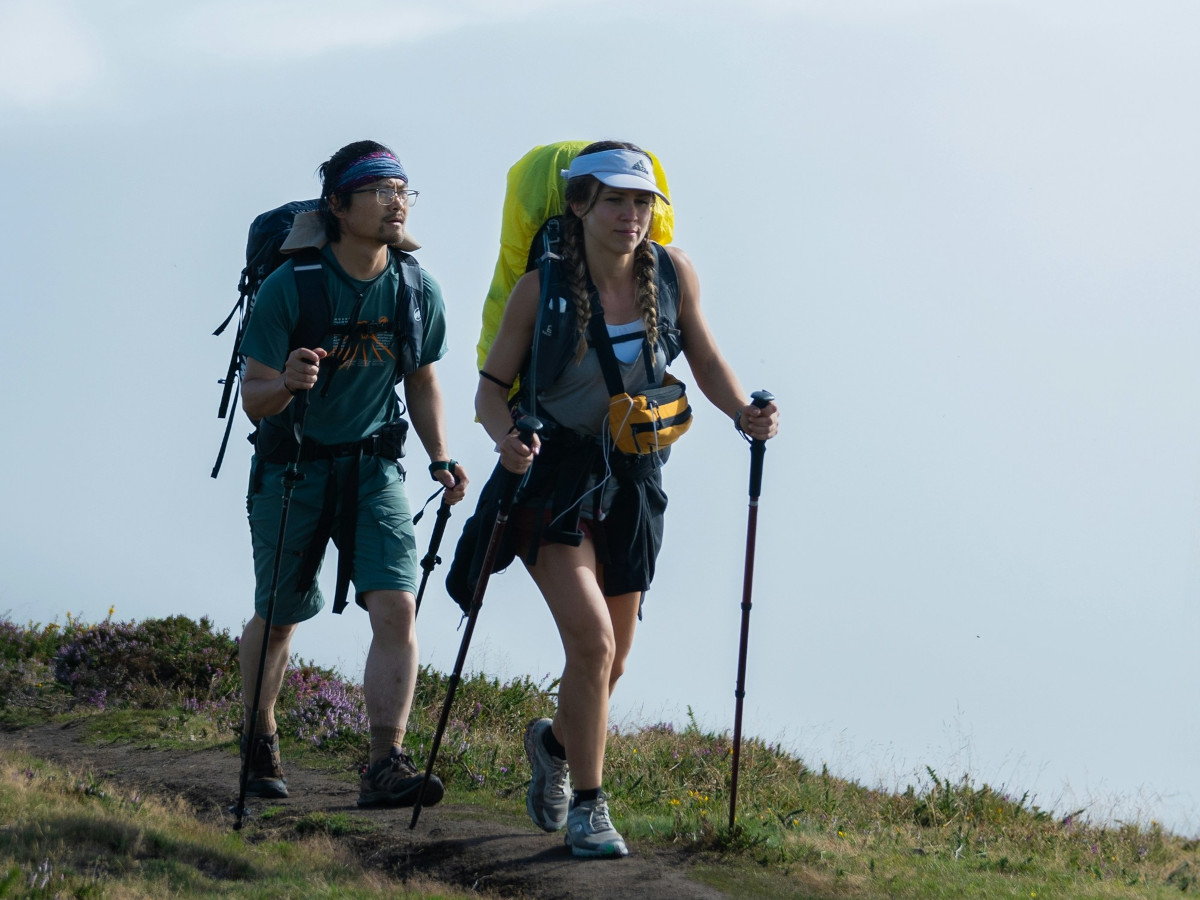
Pyrenees and mountains 📩
Here 🔥Preparing for the Camino de Santiago has never been easier... or more overwhelming. There are forums with thousands of messages, massive Facebook groups, Camino societies, subreddits, blogs, guides, apps, and communities of pilgrims sharing experiences every day.
But not all resources are suitable for the same thing. Some are perfect for resolving quick queries. Others work better as a historical archive. Others help you choose a route, lighten your load, train, or simply take that first step which so often remains as “someday”.
This selection brings together the best resources, forums, and communities for the Camino de Santiago in Spanish and English, from new-generation communities to classic forums with decades of accumulated knowledge.
Free guide
Camino de Santiago 101
Prepare your first Camino with a quick guide in English and a free community led by a local living on the French Way.
👉 Get free access to Camino 101The best Camino de Santiago resources at a glance
- Camino de Santiago Community — Camino Base CampNext-generation community to go from “I’ll do the Camino someday” to having a route, date and plan.
- Camino de Santiago Forum: the great international forum in English.
- Gronze: the reference community of practice in Spanish.
- Eroski Consumer Camino de Santiagoone of the best databases for stages and hostels.
- r/CaminoDeSantiagothe most agile community on Reddit.
- American Pilgrims on the Caminothe great associative network of the United States.
- Confraternity of St James: British reference for Anglophone pilgrims.
- Camino de Santiago All Routesone of the largest social communities on the Camino.
- Resources for bike pilgrimsForums and specific guides for cycling the Camino.
- Spanish Federation of Associations of Friends of the Camino de SantiagoInstitutional and documentary reference.
- Pilgrim MagazineJacobean culture, history, and a long-term perspective.
Camino de Santiago Community — Camino 101

Main language: English.
Best for: People who dream of doing the Camino de Santiago but haven't taken the first step yet.
Camino de Santiago Community — Camino Base Camp It is a new generation community for future pilgrims who feel the call of the Camino but don't know where to start.
Its slogan sums it up perfectly: From someday to Santiago. In other words, moving from “I'll do the Camino someday” to a concrete decision: choosing a route, setting a date, packing the backpack, training just enough, and arriving in Santiago with confidence.
Unlike classic forums, where a beginner can get lost among thousands of old threads, this community offers a clearer, more guided experience. It is designed to help sort out the initial confusion: which Camino to choose, how many days to book, how much it costs, what to bring, how to train and how to face common fears before starting.
The community relies on a practical structure within its Room Camino 101, with modules such as Start Here, Camino 101, Choose Your Camino, Plan Your Camino, Couch to Camino, Packing Checklist, Budget Calculator, Stage Planner, Life on the Camino, The Inner Camino y Finishing & Beyond.
It also has significant differential value: it is guided from the French Way itself by Eduardo Azcona, a local host in Estella-Lizarra. In his welcome message, Hello from Estella – your host on the Camino Francés, the community is presented from a real place on the Camino, not from a generic guide written from afar.
The best Turn the idea of doing the Camino into a simple, step-by-step, and supported plan.
The least good thing: As it's a new community, it doesn't yet have the historical volume of the large international forums.
Recommended for: future pilgrims who have been saying “one day I'll do the Camino” for a while, people who feel overwhelmed by too much information, first-time walkers and those who want clear guidance before diving into forums, blogs and scattered groups.
Camino de Santiago Community is a next-generation community created to solve one of the biggest hurdles for future pilgrims: not the lack of information, but the excess of it.
Their slogan sums up the proposal very well: From someday to Santiago. That is to say, moving from “someday I'll do the Camino” to a real, simple, and accompanied plan. The community is hosted on Skool, it's free to access initially and is guided by Eduardo Azcona, a local guide who lives in Estella-Lizarra, right on the French Way. The public page itself presents a course resource as Camino 101, A free and friendly guide to turning the idea of doing the Camino into a concrete first plan.
The big difference compared to a traditional forum is that it doesn't force beginners to get lost among thousands of old threads. Its promise is more direct: to help you understand the routes, the days needed, physical fitness, the backpack, and the first steps without jargon, without overload, and without falling into the typical infinite hole of forums.
Within the community, there is a progressive learning structure. The classroom includes modules such as Start Here, Camino 101: The Big Picture, Choose Your Camino, Plan Your Camino, Couch to Camino, Packing Checklist, Pack Like a Pilgrim, Budget Calculator, Stage Planner, Life on the Camino, The Inner Camino y Finishing & Beyond. In other words, it doesn't just answer isolated questions: it proposes an ordered path from the initial idea to arriving in Santiago and returning home.
It also incorporates especially useful resources for beginners: a step-by-step challenge to choose a route and set a date, a space to ask questions to a local on the Camino, a packing checklist, a budget calculator, and a stage planner. According to the classroom page, the calculator suggests estimating the real cost of the Camino and reminds that many pilgrims spend approximately between 30 and 50 euros a day on the ground.
The best combines guidance, community, and support. It's not designed for pilgrims who want to debate for hours, but for those who need clarity, structure, and a real first step.
The least good thing: As a new community, it does not yet have the message volume or critical mass of the large, historic forums.
Recommended for: future pilgrims who have been saying for months or years “I'll do the Camino someday”, people who feel overwhelmed by too much information, first-time walkers, English speakers who want a simple entry point, and those who value the perspective of someone who lives on the Camino Francés itself.
2. Camino de Santiago Forum

Main language: English, although there is also content in Spanish.
Best for: complex doubts, international planning, security, equipment, less-travelled routes and seasoned pilgrims.
Camino de Santiago Forum It is probably the most comprehensive Camino forum on the internet. Its great advantage is that it doesn't function as a fast social network, but as a living archive of knowledge. It has sections for introductions, departure schedules, frequently asked questions, safety, transport, equipment, specific routes, life on the Camino, and downloadable resources.
Its size is hard to match: in the consultation carried out it showed more than 124,000 members, more than 81,000 threads and more than 1.3 million messages, as well as recent activity with posts only a few minutes old.
The best depth, historical archive, answers from very experienced pilgrims, and useful resources.
The least good thing: It can be overwhelming for those looking for a quick answer or who aren't proficient in English.
Recommended for: Any pilgrim who wants to seriously prepare for the Camino, especially if they are undertaking a long route, a lesser-known variant, or have specific questions.
3. Bronze

Main language: Spanish.
Best for: Practical planning, stages, hostels, transport, equipment and last-minute doubts.
Gronze For many Spanish-speaking pilgrims, it is the most useful practical reference for the Camino. Its forum is organised by routes and topics: the French Way, the Portuguese Way, the Northern Way, the Primitive Way, the Aragonese Way, the English Way, the Silver Route, gear, equipment, cycling, and a general forum.
Its greatest value is that it's very down-to-earth. Its threads feature real doubts about accommodation, alternative routes, transport, gear, specific stages, hostels that are opening or closing, and practical decisions affecting today's pilgrim.
The best Very concrete information, practical tone, Spanish language and a lot of field experience.
The least good thing: It doesn't have the international clout or the global archive of the great Anglo-Saxon forum.
Recommended for: Spanish or Latin American pilgrims who want to resolve real doubts: what to pack, where to sleep, how to get there, which stage to do, or which variant to choose.
4. Eroski Consumer Way of St James
Main language: Spanish.
Best for: stages, hostels, practical sheets, pilgrim comments and basic planning.
Eroski Consumer isn't a traditional forum, but it is one of the best databases for organising the Camino. It includes routes, stages, hostels, tips, practical information, photographs, services, and pilgrim reviews.
It's especially useful for those just starting out who need a clear structure before diving into scattered opinions on forums and social media.
The best Clarity, structure, useful notes, and a beginner-friendly approach.
The least good thing: The community conversation is more dispersed and doesn't function as a modern centralised forum.
Recommended for: who is starting to prepare the Camino and needs a tidy base of stages, hostels and tips.
5. r/CaminoDeSantiago
Main language: English and Spanish.
Best for: Quick questions, equipment lists, recent experiences and last-minute doubts.
The subreddit r/CaminoDeSantiago is a very useful community for quick queries. It allows posts in multiple languages and brings together international pilgrims who share questions, photos, experiences, logistical problems, gear advice, and personal reflections.
Its greatest virtue is speed. If you have a question about backpacks, footwear, stages, bookings or other pilgrims' feelings, it's usually quicker than a traditional forum.
The best speed, international community and accessible tone.
The least good thing: Information is lost more quickly than in a structured forum, and many questions are repeated.
Recommended for: Pilgrims who want a quick contrast, especially English speakers or users accustomed to Reddit.
6. American Pilgrims on the Camino
Main language: English.
Best for: Pilgrims from the United States, prior preparation, local encounters and community before and after the Camino.
American Pilgrims on the Camino is a non-profit association focused on connecting pilgrims, supporting the Camino's infrastructure, and providing information for future walkers. Its strength is not only online: it has local chapters, activities, meet-ups, walks, mentoring, and preparation resources.
The best local red, support, events and associative backup.
The least good thing: It's very geared towards North American pilgrims.
Recommended for: Pilgrims from the United States or English speakers who want to prepare as a community before travelling to Europe.
7. Confraternity of St James
Main language: English.
Best for: British pilgrims, cultural context, spirituality, guides, hospitality, and veteran community.
The Confraternity of St James, based in the United Kingdom, is one of the most established English-speaking Jacobean entities. It maintains resources on guides, maps, credentials, regional groups, hospitality, hostels, volunteering and Jacobean culture.
It's less immediate than Reddit or Facebook, but much more robust for anyone who wants to understand the Way in depth.
The best Reliability, tradition, library and cultural focus.
The least good thing: less useful for quick questions like “what should I wear tomorrow?” or “should I book this stage?”.
Recommended for: Pilgrims from the UK, walkers with cultural or spiritual interests, and people who want to prepare for the Camino with context.
8. Camino de Santiago All Routes
Main language: English, with participants from many countries.
Best for: Massive community, general questions, inspiration, companionship, and recent experiences.
Camino de Santiago All Routes is one of the largest social groups for the Camino. Its main advantage is the network effect: lots of people, lots of answers, and a wide variety of experiences.
It works well for taking the pulse of current concerns, seeing what other pilgrims are experiencing, finding inspiration, or asking general questions.
The best Size, speed and diversity of profiles.
The least good thing: Like any large Facebook group, it can have noise, contradictory answers, and less depth than a specialised forum.
Recommended for: who seeks a wide community, inspiration, social contact, or a quick answer without entering a traditional forum.
9. Resources for cycling the Camino
Languages Spanish and English.
Best for: Bicigrinos, gravel, MTB, e-bikes, repair logistics and long-stage planning.
To do the Camino by bike, it's advisable to combine resources. In Spanish, Gronze has a specific forum for bicigrinos. Eroski also offers guides and tips for doing the Camino by bike. In English, American Pilgrims has specific resources for Cycling the Camino.
The best Specialised information for an experience very different to walking.
The least good thing: Many tips for walkers don't apply equally to bicycles.
Recommended for: bicigrinos, gravel riders, mountain bikers and time-poor pilgrims who want to cover more distance.
10. Spanish Federation of Associations of Friends of the Camino de Santiago
Main language: Spanish.
Best for: documentation, associations, hospitaleros, magazine, cartography and Jacobean heritage.
The Spanish Federation of Associations of Friends of the Camino de Santiago is one of the most important institutional resources in Spanish. Their website brings together information on associations, hospitaleros, hostels, signage, mapping, documentation, bibliography, Jacobean heritage, and services for pilgrims.
It's not the best option for quickly resolving a query about backpacks or accommodation, but it is a very valuable source for understanding the Spanish Jacobean ecosystem.
The best Documentary depth and associative support.
The least good thing: It doesn't work as a modern conversational community.
Recommended for: researchers, hospital staff, associations, journalists and pilgrims who want to go beyond the logistics.
11. Pilgrim Magazine
Main language: Spanish.
Best for: Jacobean culture, associations, history, reflection and a long-term perspective.
Peregrino magazine is one of the classic resources for understanding the Camino beyond just planning. It is particularly interesting for those who want to delve into history, heritage, associations, hospitality, spirituality, and the latest news regarding St. James.
It is not a forum, but it is an essential resource if you want to understand the Camino as a cultural, historical, spiritual, and human phenomenon.
The best continuity, cultural perspective, and Jacobean memory.
The least good thing: less useful for immediate planning queries.
Recommended for: readers interested in the historical, associative and cultural dimension of the Camino.
Which community to choose according to your profile
If you still don't know where to start
The best option is Camino de Santiago Community — Camino 101. It's precisely designed for that moment before the first step: when you have the idea, the Camino appeals to you, but you don't know which route to choose, how many days you need, how to train, what to take, or how to turn the desire into a concrete date.
If it's your first Camino and you read Spanish
Start by Gronze y Eroski Consumer. With these two sources, you can sort out the 80 % from the initial planning: stages, accommodation, equipment, transport and basic queries.
If you walk in English or are an international pilgrim
The best combination is Camino de Santiago Forum + r/CaminoDeSantiago. The forum gives you depth and an archive; Reddit gives you quick answers and contact with other current pilgrims.
If you go by bike
Use specific resources for cycle pilgrims: the Gronze forum, the Eroski guides, and the American Pilgrims on Cycling the Camino pages.
If you're looking for company
Large Facebook and Reddit groups work better than classic forums. However, it's wise to be careful with privacy and not to post overly specific details about where you'll be sleeping or where you'll be walking each day.
If you are interested in the history and culture of the Way of St. James
The best combination is Confraternity of St James, Pilgrim Magazine and the Spanish Federation of Associations of Friends of the Camino de Santiago.
Conclusion
The best resource for the Camino de Santiago is not just one thing. It depends on where you are in your journey.
If you're still in the “someday I'll do the Camino” phase, a guided community like Camino de Santiago Community — Camino Base Camp it could be the best first step.
If you already have a route and dates, Gronze, Eroski y Camino de Santiago Forum They will help you resolve specific details.
If you want a quick contrast, go in Reddit o in large Facebook groups.
And if you want to understand the Camino beyond the logistics, it is worth getting in touch with the jacobite associations, the Peregrino magazine, and the historical resources.
The Camino has always been a network of help, conversation, and hospitality. Today, that network also exists online. The key is knowing where to ask... and, above all, when to stop reading and start walking.


