

Mental preparation for a long trek: what I learned abandoning the GR11
Pyrenees and mountains 📩
Here 🔥Exactly a year ago I set out with a dream: to hike the Pyrenees on foot along the GR11. I had trained. I had planned. I had prepared the equipment. I had worked hard for months.
But there was something I wasn't prepared for: the mental state.
This article is not about that defeat. It’s about everything I had to change to try again.

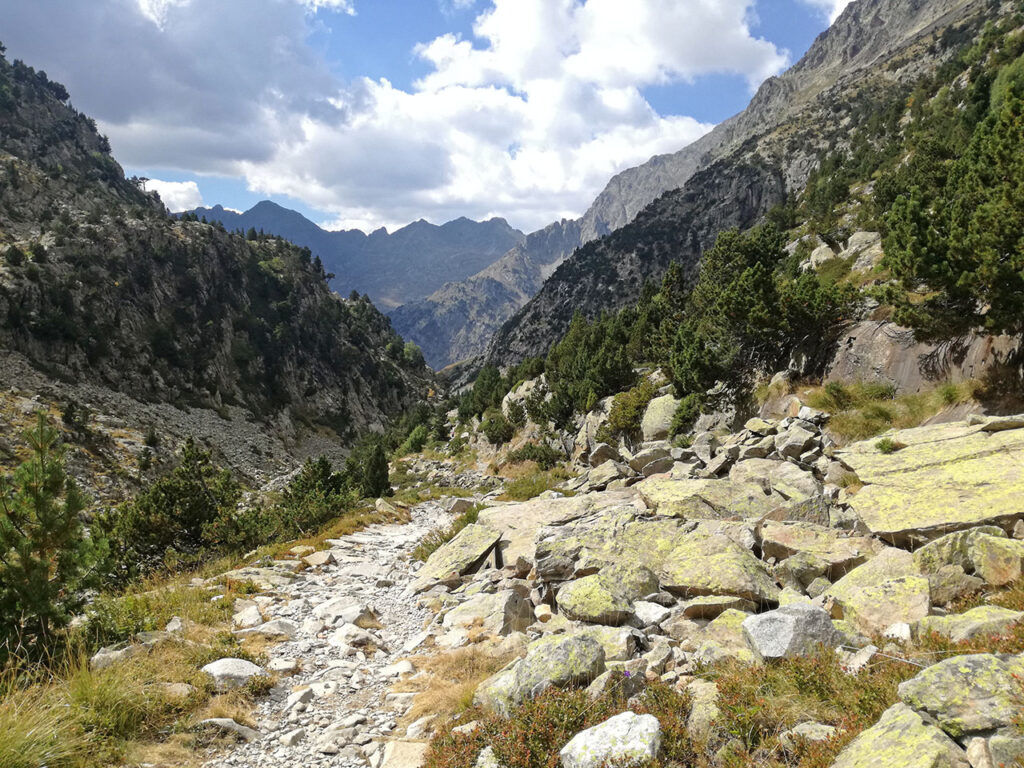


Giving up is not the end of the story
Almost no one tells this part of the story. The summaries of completed trips are published, not those that are cut short. And yet abandoning is one of the most common experiences on a long journey, and one of the most instructive.
In the community of Travesía Pireánica, they also talk about this: about bad days, about the decisions to withdraw, about how you get back on track. If you are preparing your own, it is worth reading about people who have already been through it.
Where it came from
The idea of hiking the Pyrenees on foot came to me around 2020. It was a huge dream for me, so I made the decision and started the long journey of preparation: months of working, training, studying the maps, preparing the route, drawing out each track, and coming up with alternatives to have escape routes.
And then, the challenge.
I left from Hondarribia. I slept in the lighthouse with all the enthusiasm in the world to complete that journey. And the first few weeks were wonderful. I was going really well.
But something went wrong.
Where it broke
When I entered the Central Pyrenees, all that stone wore me down emotionally. To that was added the hormonal wear and tear that many women carry with us and that in a long journey cannot be ignored.
«The most correct decision I can make is to stop here.»
That was what I said. And I stopped.
When I got home, I felt disappointed with myself. I realized that all that preparation was of no use, because the key point was missing: my mind.
Before I thought that physical preparation was everything. Before I thought that nutrition was everything. And no. You can get there with perfect legs and the head saying, "That's it.".
What has changed this year
This year I didn't want to repeat exactly the same journey. This year I'm trying the High Pyrenean Route, and the preparation is different in four ways.
1. The head comes first
The training is still going on, but not at the same intensity. What I’m really preparing for this year is the mental state. That’s what worries me the most, because until you’re not on the field you don’t know how the journey will unfold.
2. Without support
Last year I had the support of Tony, who was helping me with my supplies. The backpack weighed about 7.7 kg and I had a sleeping bag in it.
This year I am going completely self-sufficient. The backpack will weigh about 10 kg, and of those 10 kg, Four are food for 30 days.
3. Another feeding strategy
Last year I brought Jumbo's smoothies. This year I don't: they're very heavy, because they're mostly made with flour.
I have been working on the nutritional strategy for months with a twofold goal: to reduce weight to the maximum and to ensure that the body does not have any deficiencies. The foundation is nutritional supplements and smoothies that provide the necessary nutrition to ensure that the muscles do not falter.
4. Another recording format
Last year I was recording, editing, and publishing every stage at the end of the day. That prevented me from optimizing the batteries, and it was also one of the reasons why my head finally said enough is enough.
This year the format changes: weekly videos, published when returning from the trip. This way I make the most of the hours of daylight to walk, which is what I came here to do.
Other changes in the material
- Without a sleeping bag. I sleep with my clothes on, including a fur pants.
- The store, in parts. I only carry the exterior cabin; the interior stays at home. The weight drops to 500 g.
Later I will make a specific video with everything I have in my backpack to do the HRP in total self-sufficiency.
Quick guide
GR 11
with everything you need to know before undertaking the Pyrenean Path
Why the HRP and not the GR11 again?
The HRP is more wild, more technical, more risky.
I am not afraid of it. I consider myself prepared for it.
And I am not looking for a rematch against the mountain. I am looking for a rematch against myself.
Last year I learned that the mountain doesn't always let you pass. I don't know if I'll get to the end. But I do know one thing: the person who starts this journey is not the same person who left a year ago.
Almost no one tells this part of the story. The summaries of completed trips are published, not those that are cut short. And yet abandoning is one of the most common experiences on a long journey, and one of the most instructive.
 Spanish
 English
 French