

Tips for solo trekking
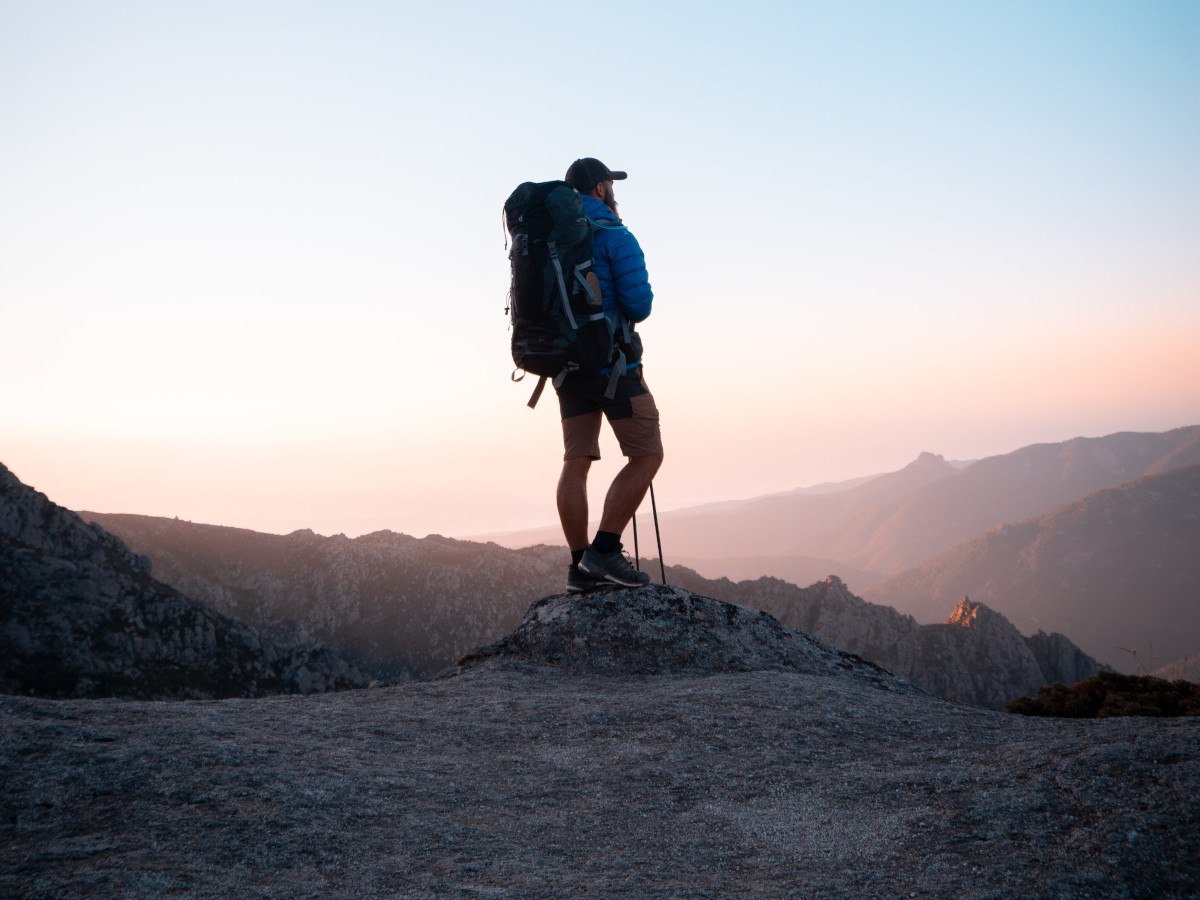
Pyrenees and mountains 📩
Here 🔥A large number of hikers prefer to go to the hiking alone. Some do it because they can't find companions for their walks, and others because they enjoy having direct contact with nature on their own.
In all cases, it is important to be clear that there will be no one nearby to help you should a problem arise. For this reason, the following are interesting tips for solo hiking with adequate security.
Tips for solo trekking
There are many hiking trails, short and long, up to several days long. There are routes without much gradient in "friendly" terrain and routes in high mountains. Some have well-marked trails and others require a map, compass and proper orientation.
For this reason, if you are going to do a hiking route alone, it is essential that you adapt to your level and choose the route you are planning well. There are those that can easily be done alone, while there are others for which you need to train and organise yourself well in advance.
Here are some recommendations for you to consider so that you can hiking alone of any length and duration.
Carrying a good team
With regard to the hiking equipmentit is important to carry clothing that gives you comfort and that you have already used it. As for footwear, it is essential that you select it according to the type of route you plan to do, for example, if it is on flat terrain or in the mountains. It is suggested that you wear your footwear well before hiking, as this will ensure that you avoid blisters and foot injuries.
If the trail you plan to do is long or will take several days to complete, you need to choose a comfortable backpack, that adapts well to your body and has lumbar support. It is also essential to organise the weight on it to be able to walk more comfortably.
In the preparation of the rucksack You should bring plenty of water, a first aid kit, a hat or cap to protect you from the sun, a rain jacket if there is a chance of rain, sun cream and some dried fruit or energy bars to take with you on the route.
There are specialised products that are light and will provide you with energy for your walks, such as dried fruit, nuts, almonds or dates. If you are going to hike routes where water is not available, you can include a canteen with a purifying filter or water purification tablets.

Start step by step
It is recommended to start with short hiking trails, changing surfaces, and then to keep evaluating and improving until you have enough experience and fitness to be able to tackle more demanding trails. It is not advisable to do a longer or longer hiking route if you have not done smaller trails before.
When choosing a route for your first solo hike, a trail should be chosen where there is no chance of getting lost. Also, the terrain and conditions should be within your capabilities. Your first solo hiking route is not an activity to take risks. You can even choose a trail you have already been on or one close to your home to make it more familiar.
Prepare the route in advance and give advance notice of your departure.
Another tip for solo hiking is to study the route very well before setting off. It is important to be familiar with the route, to know the length, the level of difficulty and the altitude. If you are going to follow other people's routes, you should consider what your level is. Calculate the duration of the route according to your level and your pace, analyse the slope of the route, the type of surface and study the map.
It is not easy to stay in communication at all times, as in the mountains it is common for coverage to be lost. However, you should always let people know where you are going, share the route you are taking and, when there is coverage, share your situation with a family member or friend. This way, there will be a reference point in case you get lost.
Search for weather information
Another important aspect of solo hiking is to check the weather, especially if you are hiking in the mountains. Hiking in bright sunshine is not the same as hiking in light rain or a thunderstorm. Respect the mountain and gather all the necessary information before setting off.
Use a map app
Another recommendation for solo hiking is to first download one of the many offline mapping apps available for both Android and iOS devices.
Also, for solo hiking you should carry an external battery. They are not very heavy and are never superfluous, because if you get lost or it gets dark and you run out of battery in your mobile phone, you will be able to charge your device to use the map or make a call if you need to.
Make use of an emergency device
There is a strong need to consider investing in a emergency beacon. These devices can be configured to keep friends and family informed of your location and, in the event of an emergency, can emit a distress signal to alert search and rescue agencies.
Travel insurance
If the hiking route is to be done abroad, it is important that you have a good hiking insurance policy. travel insurance that can cover you in the event of an accident. The policy should always be kept on hand with the assistance number so that you can contact them if required.
Respecting the natural environment
Never forget your responsibility for the environment. Don't litter in natural landscapes and make sure you take away everything that doesn't belong there. If you see litter you must pick it up.
Conclusion
As you can see, there are a number of tips for solo hiking that you should take into account from the moment you plan your adventure. By applying these recommendations you can guarantee that you will carry out an activity with adequate safety, both for you and for the natural environment.
 Spanish
  English
  French